How to Choose a Construction Waste Bin Rental?
Choosing a construction waste bin rental starts with a clear picture of the worksite, not just the pile of debris. The U.S. Environmental Protection Agency estimated that the country generated about 600 million tons of construction and demolition debris in 2018. Its report, Advancing Sustainable Materials Management: 2018 Fact Sheet, notes that demolition accounted for more than 90 percent of that total. Those are national figures, not a forecast for your project. Still, they show why bin size, weight limits, and pickup timing deserve careful attention.
Look at what will actually go into the bin: drywall, timber offcuts, roofing, concrete, or mixed renovation waste. A small bathroom remodel may fill a container slowly, while a driveway pour can create heavy rubble in a short time. Heavy loads can reach weight limits before the bin looks full. That detail is easy to miss. Measure the available placement area, check truck access, and ask the rental provider which materials are accepted. Confirm delivery, collection, rental periods, and possible extra charges in writing. Local disposal requirements and facility policies may differ, so verify them for your location. A practical estimate is useful, but it will not be perfect. Keep some room for the unexpected; real jobs rarely follow the neat pile you pictured.
Assess the Project Scope and Types of Construction Waste
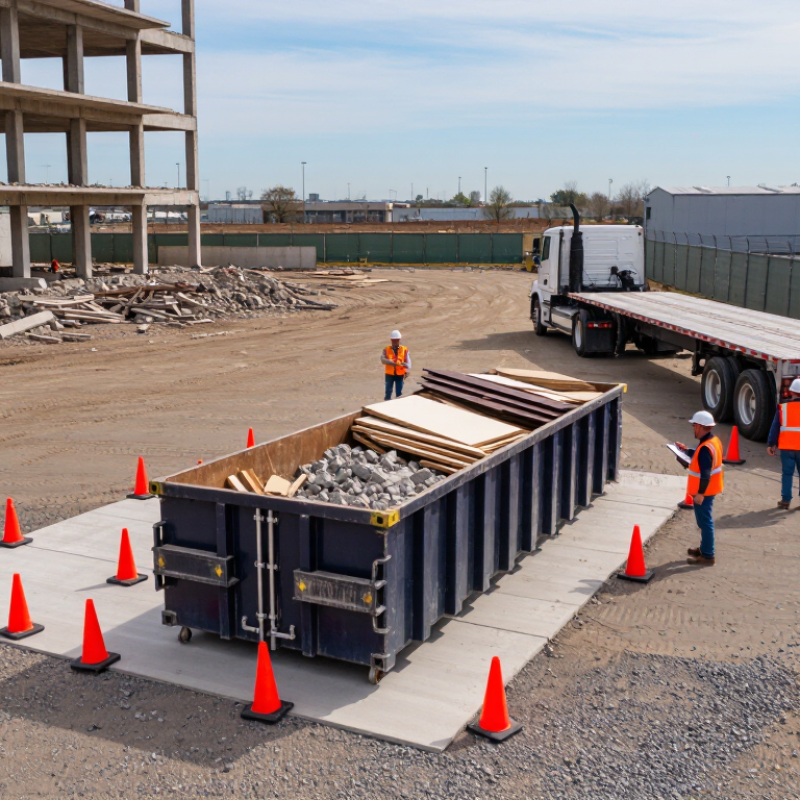
Before choosing a construction waste bin rental, map the work area and estimate what each project phase will produce. A kitchen renovation may create cabinets, drywall, flooring, and packaging, while a driveway replacement can generate dense concrete and soil. These materials take up space differently. Heavy debris may reach a rental company’s weight limit before the bin looks full. Measure the available loading area, too; a large container is not useful if trucks cannot place it safely.
Tips: Separate heavy rubble from lighter waste when possible. Ask the rental provider about accepted materials, weight limits, and mixed-load rules. Keep a simple estimate of how many bags, boards, or wheelbarrow loads the project may produce.
Be specific about waste types when requesting a size recommendation. Timber offcuts and cardboard are bulky but relatively light; bricks, tiles, and concrete are compact and heavy. Don’t rely on a single “average renovation” estimate. Site conditions change, and estimates are rarely perfect. I’d rather reassess after the first workday than discover the bin is nearly full while demolition is still underway. If the project happens in stages, note when each material will be removed and whether the bin can be exchanged between phases.
How to Choose a Construction Waste Bin Rental
Assess the Project Scope and Types of Construction Waste
Common roll-off dumpster rental capacities range from 10 to 40 cubic yards. Match the bin to the project’s expected waste volume and material types, and check rental weight limits—dense materials such as concrete can reach weight limits before a bin is full. Available sizes and restrictions vary by provider and location.
Estimate Debris Volume and Select an Appropriate Bin Size
Estimate debris before choosing a construction waste bin. Walk the site and list what will be removed: drywall, flooring, cabinets, roofing, or concrete. Measure each pile’s length, width, and height, then multiply to estimate cubic feet. Divide by 27 to convert the total to cubic yards. That gives a useful starting point, not a perfect prediction. Broken drywall settles; intact doors and long boards leave awkward gaps. Measure twice.
The U.S. Environmental Protection Agency’s 2018 construction and demolition debris report estimated 600 million tons of such waste generated nationally. More than 90% came from demolition. This scale matters on smaller jobs, too: debris type changes both volume and weight. A bin that fits bulky timber may exceed its weight allowance with dense masonry. Check the rental provider’s weight limit, and ask whether heavy materials need a separate container.
Add a modest volume buffer for irregular pieces and late discoveries, but avoid ordering by guesswork alone. Keep heavy debris low and distribute it evenly. Don’t fill above the bin’s marked line; protruding boards can prevent safe transport. For a kitchen renovation, sketch the cabinet and countertop piles separately, then compare their combined volume with available bin sizes. The estimate may still be off. A quick site review can catch that.
Check Waste Restrictions, Permits, and Placement Requirements
Before choosing a construction waste bin, check what your project may place inside it. Rental rules often separate clean concrete, soil, timber, and mixed renovation debris. Some loads have weight limits, even when the bin still looks half empty. Ask for the accepted-material list and clarify how to handle painted wood, insulation, or mixed rubble. Assumptions can get expensive.
Placement rules deserve equal attention. A bin on private property may need different approval from one placed on a street or sidewalk. Contact your local public works or permitting office to confirm whether a permit is required, how long approval takes, and what clearance must remain for pedestrians and vehicles. Requirements vary by location. Check early.
Measure the delivery area, including overhead branches, gates, and the turning space for the truck. Keep the bin away from utility covers and drainage grates, and protect paving with boards if the surface may be marked. Take a few photos before delivery; they help document the site condition. It is easy to miss one small obstruction when work is underway, so walk the route again on delivery day.
Compare Rental Terms, Fees, and Service Options
How to Choose a Construction Waste Bin Rental?
Compare Rental Terms, Fees, and Service Options
A construction waste bin rental may seem straightforward until the project runs late or the container fills early. Compare the rental period, delivery window, pickup process, and extension policy before booking. Ask how extra days are charged and whether a swap is available when the bin is full. Small details matter. A low starting price may not include every service you need, so request an itemized quote.
Check what the quoted fee covers, including delivery, collection, disposal, and any weight allowance. Ask how excess weight is measured and priced; a written rate is easier to plan around than a vague estimate. Also confirm where the bin can be placed and whether access requirements affect delivery. Service options vary. A provider may offer scheduled pickups, flexible exchanges, or set delivery times, but availability can depend on location. It is easy to overlook timing when comparing prices, and a missed pickup can disrupt work.
Tips: Estimate the waste volume with your contractor, then allow a little room for uncertainty. Keep the quote and service details handy. If a term is unclear, ask for an example in dollars before signing.
Plan Delivery, Loading, and Pickup for the Project Timeline
Schedule the bin around the work, not just the calendar. The U.S. Environmental Protection Agency estimated that construction and demolition activities generated 600 million tons of debris in 2018. That scale helps explain why access, sorting, and pickup timing matter on even a small renovation. Confirm the truck’s route, placement surface, and delivery window before demolition starts. A narrow driveway or a parked vehicle can turn a simple drop-off into a costly delay.
Estimate the waste volume by phase, then choose a bin with enough capacity for bulky materials without blocking daily work. Keep heavy debris within the rental provider’s loading limits, and leave space near the bin for safe carrying. Set the pickup request before the container is full; some providers need advance notice, and weather or traffic can shift a planned arrival. A neat schedule can still fail when a crew discovers hidden material. Build in a little flexibility.
Tips: Put delivery, loading, and pickup dates on the site calendar, and assign one person to confirm changes. Ask what materials are accepted and how high the bin may be loaded. Take a quick photo of the placement area before delivery; it can reveal access problems you missed on paper.
How to Choose a Construction Waste Bin Rental? - Plan Delivery, Loading, and Pickup for the Project Timeline
Use this schedule as a planning framework. Bin availability, accepted materials, weight allowances, permits, and collection times vary by location and rental provider, so confirm details before booking.
| Project Timeline | Planning Step | What to Decide or Confirm | Practical Check |
|---|---|---|---|
| Before booking | Estimate waste volume and type | List expected materials, such as clean wood, drywall, roofing, concrete, soil, or mixed construction debris. Estimate the volume and consider how much material the project will produce. | Ask whether separate bins are needed. Heavy materials may have different load limits or disposal requirements from lighter mixed debris. |
| Before booking | Choose a suitable bin size | Compare the project’s estimated debris volume with the container sizes available in your area. Include room for bulky items and avoid assuming that a bin can be filled above its marked fill line. | Confirm both the container’s volume and its maximum weight allowance. A bin can reach its weight limit before it looks full. |
| Before delivery | Check site access and placement | Choose a level, firm location with clear access for the delivery vehicle. Check overhead wires, tree branches, gates, parked vehicles, and space needed for loading. | If the bin will be placed on a public street or other public property, check local permit requirements in advance. |
| Before delivery | Schedule delivery around site readiness | Coordinate the delivery date with demolition, renovation, or cleanup work so the bin is available when debris begins to accumulate. | Confirm the delivery window, placement instructions, site contact, and what to do if access is blocked. |
| During loading | Load safely and follow acceptance rules | Distribute debris evenly, keep material below the fill line, and avoid overloading. Separate or exclude items that are not accepted in the bin. | Check the provider’s current list of restricted materials. Items such as hazardous waste, chemicals, batteries, tires, or certain appliances may require separate handling. |
| Before the bin is full | Review whether service needs have changed | If the project is producing more or less waste than expected, ask about a swap, an additional container, or a revised pickup date. | Arrange changes before the bin becomes inaccessible or exceeds its weight or fill limits. |
| Before pickup | Prepare the bin and collection area | Finish loading, keep the area around the bin clear, and make sure the collection vehicle can reach it safely. | Confirm the pickup date and any required notice. Secure or remove loose debris that could fall during transport. |
| At project closeout | Check final charges and site condition | Review the rental period, weight allowance, additional-service terms, and any charges that may apply under the agreement. | After collection, inspect the placement area and confirm that the project site is clear of leftover debris. |
Scheduling tip: Build the delivery and pickup dates into the project timeline, and leave flexibility for changes in site access, debris volume, weather, or collection availability.
Related Posts
-
Top 10 Dumpster Rental Construction Tips for Global Buyers
-
7 Best Construction Trash Container Rental Options?
-
Why Choose Construction Trash Bin Rental for Your Project?
-
How to Choose a Construction Garbage Bin Rental in 2026?
-
Top Construction Bin Rental Companies Near Me?
-
How to Choose a Construction Trash Bin Rental