Best Construction Garbage Containers in 2026?
Choosing the best construction garbage containers in 2026 starts with the waste, not the product label. Concrete chunks, drywall scraps, roofing shingles, and mixed renovation debris place different demands on a container. A compact 10-yard bin may fit a bathroom remodel, while demolition debris can fill it faster than expected. That mismatch costs time.
A practical comparison looks at capacity, container type, access, and rated load limits. Roll-off dumpsters work well for many larger projects, while smaller containers may suit tight driveways or limited cleanouts. Measure the placement area, including overhead clearance for delivery, and check whether trucks can reach the site safely. Space matters. Before booking, confirm which materials are accepted, how weight is priced, and whether pickup or rental extensions carry extra fees. These details can vary by provider and location, so written terms are more dependable than a quick estimate. This guide examines common container options and the trade-offs that shape their value. The largest bin is not automatically the best choice; an oversized container can waste budget, while an undersized one may require another haul. The right fit depends on the project, and estimates are not always perfect. A little uncertainty is normal. Use the comparisons ahead to narrow your choices, then verify dimensions, limits, and service details directly with the supplier.
What Construction Garbage Containers Are and How They Serve Job Sites
Best Construction Garbage Containers in 2026?
What Construction Garbage Containers Are and How They Serve Job Sites
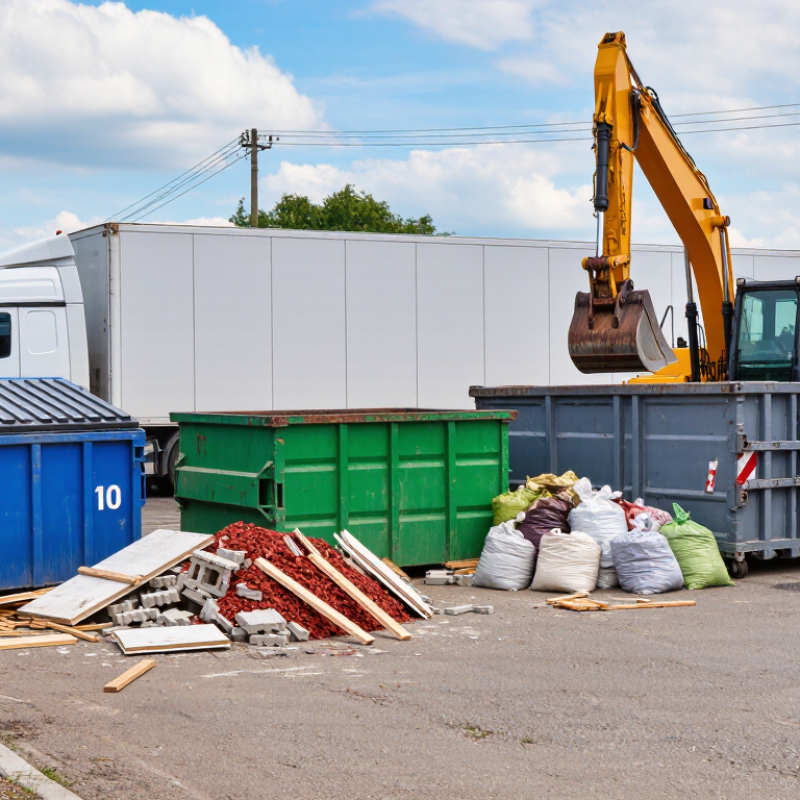
Construction garbage containers are sturdy bins or roll-off boxes built to hold debris from building, renovation, and demolition work. Crews use them for materials such as broken drywall, wood offcuts, packaging, and roofing scraps. A container keeps waste in one designated place, rather than scattered around walkways or loading areas. That can make cleanup more predictable and help reduce trip hazards. It also gives site managers a clearer view of how quickly debris is accumulating.
Tips: Estimate the volume and type of waste before arranging delivery. Check the container’s dimensions, placement area, and weight limits with the provider. Keep access clear for loading and pickup. Don’t fill above the marked line.
The right container depends on the project, available space, and removal schedule. A compact renovation may need less capacity than a multi-crew build, but choosing by volume alone can be misleading. Dense materials can reach weight limits before a container looks full. Separate recyclable materials where practical, and keep prohibited or hazardous waste out of general construction debris. Plans change on real job sites; an extra pickup or a poorly placed container can still disrupt the workday.
Common Container Types, Sizes, and Suitable Construction Materials
Best Construction Garbage Containers in 2026?
Construction debris varies widely: a container suited to timber may be unsafe or impractical for dense concrete. The U.S. Environmental Protection Agency estimated that the United States generated 600 million tons of construction and demolition debris in 2018—more than twice its municipal solid waste. That scale makes sorting and matching container size to material important.
A 10-yard roll-off container can suit compact loads of concrete, brick, or soil; 20-yard containers often fit smaller renovations. For bulky framing, drywall, or mixed renovation waste, 30- and 40-yard containers offer more volume. They do not necessarily allow more weight.
I find cubic-yard labels a little deceptive. Concrete fills space slowly but reaches weight limits quickly, while insulation and timber can fill a large container before becoming heavy. Check both the container’s capacity and the hauler’s weight limit. Keep heavy masonry separate when possible.
Clean wood, metal, and cardboard may also be easier to recover when kept apart from mixed debris. Roofing shingles and drywall need careful loading; sharp pieces can shift, and overfilled containers create handling problems.
The EPA’s Advancing Sustainable Materials Management: 2018 Fact Sheet provides the debris estimate; on-site conditions still determine which container works. A quick volume estimate helps, but it is not a substitute for checking the actual material mix.
Key Criteria for Comparing Construction Containers in 2026
Best Construction Garbage Containers in 2026?
Key Criteria for Comparing Construction Containers in 2026
Choosing a construction container starts with the waste, not the price tag. The U.S. EPA estimated that construction and demolition activities generated 600 million tons of debris in 2018, more than twice the amount of municipal solid waste. Its report also notes that demolition accounted for most of this material. These figures make capacity and sorting important, but they do not predict any single project’s needs. Compare container volume, permitted payload, and pickup terms together. A large container may still reach its weight limit early when loaded with concrete or soil.
Check access before ordering. Measure the gate, turning space, and overhead clearance, then confirm whether the container has a door for wheelbarrow access. Separate clean wood, metal, and rubble only when your site plan and hauler can handle those streams. Ask about accepted materials and extra-pickup charges in writing. Details vary by location. A neat-looking container is not automatically the safest or most efficient choice; placement and loading habits matter too.
Tips: Estimate debris by material, and ask the hauler to confirm both volume and weight limits. Leave space around the opening, and keep heavy rubble low. Recheck your estimate after the first few days; early guesses can be wrong.
Source: U.S. Environmental Protection Agency, Advancing Sustainable Materials Management: 2018 Fact Sheet.
Container Options for Small Renovations, Large Builds, and Heavy Debris
Best Construction Garbage Containers in 2026?
Container Options for Small Renovations, Large Builds, and Heavy Debris
Small renovations often produce bulky, mixed waste: drywall offcuts, cabinet panels, and flooring. A 10- or 15-cubic-yard container can suit a kitchen or bathroom update, provided the debris stays below its fill line. For larger builds, 20- to 40-yard containers reduce trips, but they need clear truck access and stable ground. Bigger is not always better.
Heavy debris needs special planning. Concrete, brick, and soil can reach weight limits before filling a container, so smaller loads may be safer and easier to haul. The U.S. Environmental Protection Agency estimated that construction and demolition activities generated 600 million tons of debris in 2018—more than twice the amount of municipal solid waste. That scale makes sorting and right-sizing practical, not fussy. Still, estimating waste from a drawing alone can be imperfect; actual material quantities change during a job.
Tips: Ask about weight limits and accepted materials before delivery. Keep containers level, leave room for the truck, and separate clean concrete when possible. Check local disposal requirements, too. A quick site walk can prevent an awkward mid-project swap.
How to Choose, Place, and Manage a Construction Garbage Container
Choosing a construction garbage container starts with the waste, not the advertised capacity. Estimate the volume of drywall, lumber, packaging, and roofing debris separately. Dense materials can reach weight limits before a container looks full. For mixed renovation waste, leave room for awkward pieces and safe loading. A rough estimate is still rough.
Place the container on firm, level ground close to the work area, but outside equipment paths. Keep it level. Check overhead clearance for delivery trucks, and keep doors, drains, and pedestrian routes accessible. Before delivery, confirm site access, surface protection, and placement requirements with the property manager or local authority. Plywood beneath the wheels may reduce marks on asphalt, though it is not foolproof.
Manage the container daily. Break down boxes, stack lumber flat, and keep debris below the fill line. Never let material hang over the sides; shifting loads can create hazards during pickup. Separate recyclable materials when the project plan and local facility accept them. Track how quickly the container fills, then adjust pickup timing or size next time. Estimates can miss hidden layers, so a modest capacity buffer may prevent a rushed extra haul.
Best Construction Garbage Containers in 2026? - How to Choose, Place, and Manage a Construction Garbage Container
| Project need | Container size | Approximate capacity | Typical approximate footprint | Best suited for | Practical placement and management |
|---|---|---|---|---|---|
| Small renovation | 10 yd³ roll-off | About 7.6 m³ | Often about 12 ft × 8 ft (3.7 m × 2.4 m); dimensions vary | Bathroom or kitchen remodel debris, flooring, and a limited amount of drywall or wood | Choose a level, firm surface with clear truck access. Keep debris below the container’s fill line and avoid overloading. |
| Room addition or medium remodel | 20 yd³ roll-off | About 15.3 m³ | Often about 22 ft × 8 ft (6.7 m × 2.4 m); dimensions vary | Mixed construction debris from a larger interior renovation or small addition | Confirm delivery and pickup clearance, including overhead wires and branches. Separate recyclable materials where local facilities accept them. |
| New home construction or major renovation | 30 yd³ roll-off | About 22.9 m³ | Often about 22 ft × 8 ft (6.7 m × 2.4 m), with taller sides than smaller units; dimensions vary | Bulky, lightweight debris such as framing offcuts, packaging, drywall, and general site waste | Place near the active work area without blocking fire lanes, sidewalks, entrances, or drainage. Schedule swaps before the container is full. |
| Large site with high-volume, lightweight waste | 40 yd³ roll-off | About 30.6 m³ | Often about 22 ft × 8 ft (6.7 m × 2.4 m), with higher sides; dimensions vary | Large volumes of bulky, relatively light debris; not automatically suitable for heavy materials | Check the container’s weight allowance and hauling terms before loading. Dense materials can reach weight limits well before the container is full. |
| Concrete, brick, soil, or roofing shingles | Small, heavy-duty container or dedicated inert-waste bin | Use a limited, provider-approved volume; weight often determines capacity | Varies by container and hauling vehicle | Dense materials that can exceed weight limits in a large general-purpose container | Ask the hauler about accepted materials and maximum load weight. Do not mix restricted materials or exceed fill and weight limits. |
| Ongoing small-volume site waste | Lidded front-load dumpster, if collection access is suitable | Common sizes range from about 2 to 8 yd³ (1.5–6.1 m³) | Varies by size; generally more compact than a large roll-off | Routine, lower-volume waste during a longer project | Keep the service area clear for scheduled collection. Confirm that the provider accepts construction debris in this container type. |
Size, dimensions, weight limits, accepted materials, and permit requirements vary by location and hauler. Verify these details before delivery; a cubic-yard rating describes volume, not allowable weight.
Related Posts
-
How to Choose Construction Disposal Containers in 2026
-

China Top 10 Construction Garbage Container Manufacturers
-
7 Tips for Choosing Construction Trash Containers?
-
How to Choose Construction Garbage Containers?
-
How to Choose Construction Waste Containers in 2026
-

What Types of Construction Waste Containers Are Available?