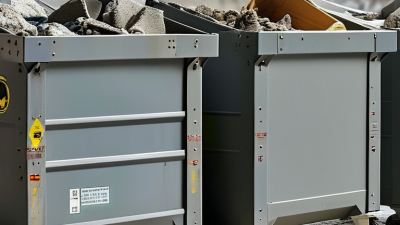
2026 How to Choose the Right Construction Trash Bin?
Choosing the right construction trash bin in 2026 requires more than estimating how much waste a project will create. Material type, loading access, weight, and collection frequency all affect the decision. A bin filled with drywall behaves differently from one holding broken concrete. Real sites are messier.
The U.S. Environmental Protection Agency reported approximately 600 million tons of construction and demolition debris generated in 2018. Its report, published in 2020, identified concrete, asphalt, wood, and gypsum as major material streams. This figure shows why a small volume estimate can be misleading. Heavy debris may reach a container’s weight limit before it looks full. A 20-yard bin may suit bulky framing waste, while dense masonry may require a smaller bin or separate hauling plan.
The World Bank’s What a Waste 2.0 report estimated 2.01 billion tonnes of municipal solid waste worldwide in 2016. It projected growth to 3.40 billion tonnes by 2050. Construction waste is not identical to municipal waste, but the trend highlights growing pressure on disposal systems. A responsible choice should therefore consider recycling options, landfill diversion, and documented hauler practices.
This guide examines practical selection factors for contractors, site managers, and property owners. It covers bin dimensions, safe placement, access clearance, weight limits, rental timing, and material separation. Local pricing and rules can change quickly. No single container works everywhere. The best construction trash bin is the one matched to the project’s actual materials, site conditions, and disposal route, not merely the cheapest advertised size.
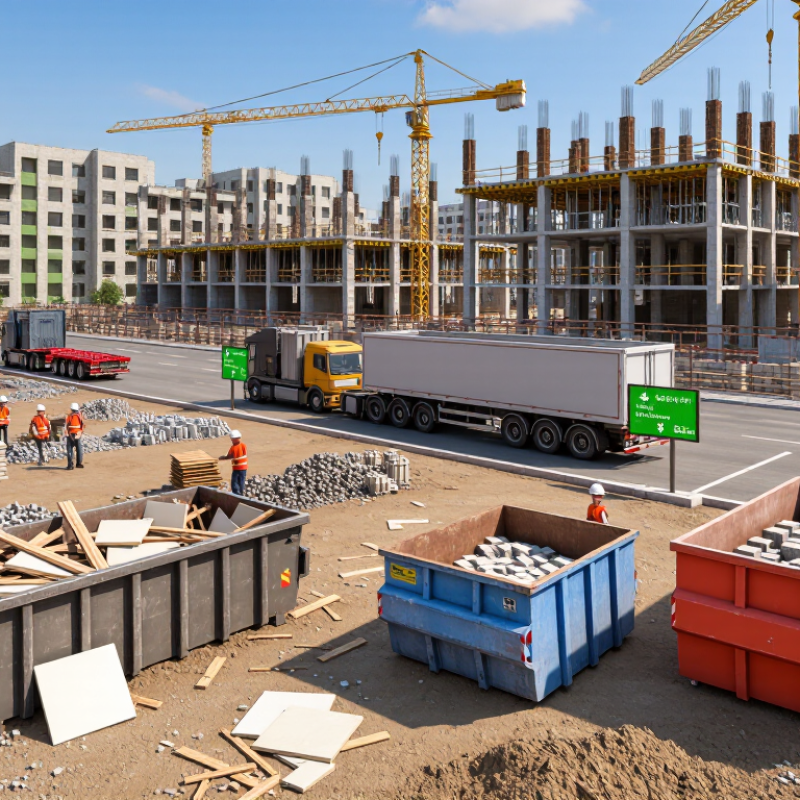
Define the Project’s Waste Type, Volume, and Disposal Needs
How to Choose the Right Construction Trash Bin?
The correct bin starts with the waste type, not the project name. Separate concrete, clean wood, metal, drywall, soil, and mixed debris before ordering. The U.S. Environmental Protection Agency reported about 600 million tons of construction and demolition debris in 2018. That volume shows why accurate sorting matters. A bin filled with heavy rubble may reach its weight limit before it looks full.
Estimate volume from demolition plans, material deliveries, and previous site records. For example, a bathroom renovation may produce several cubic yards of drywall, tile, packaging, and timber. A foundation project creates denser waste, requiring a lower-volume bin with stronger weight capacity.
Eurostat reported that construction generated 38.4% of total waste in the European Union in 2022. The number is significant. Waste planning cannot remain an afterthought.
Disposal needs also affect bin selection. Reusable materials may need separate containers, while contaminated or regulated materials require approved handling channels. Confirm local weight limits, collection schedules, access clearance, and accepted materials before delivery. Leave enough space for loading, but not so much that the bin becomes inefficient. A quick visual estimate can be wrong. I have seen “half-full” bins exceed safe weight limits because masonry hides beneath lighter wood. Recheck the estimate after the first removal and adjust the next container accordingly.
Compare Construction Trash Bin Sizes, Materials, and Loading Options
Choosing the right construction trash bin starts with the waste, not the calendar. Estimate the volume of drywall, timber, concrete, and packaging before ordering. A small renovation may need a 10-cubic-yard bin. Larger demolition work often requires 20- or 30-cubic-yard capacity.
A 10-yard bin suits heavy materials because its lower walls reduce overloading risks. A 20-yard bin offers more room for mixed debris, while a 30-yard model works better for bulky, lightweight waste. Do not choose capacity by appearance alone.
Concrete and soil become heavy quickly, so confirm the permitted weight with the service provider. My first estimate was wrong because I counted bags, not their compressed contents.
Material also affects performance. Steel bins handle rough debris and repeated loading well. Reinforced floors help protect against concrete chunks and sharp metal edges. For lighter waste, a standard steel container may be sufficient.
Inspect the door hinges, floor condition, and wall dents before use. These details reveal how the bin was maintained. My practical preference is simple: match the bin opening to the equipment already on site.
Loading access can change the whole workflow.
Top-loading bins are practical for wheelbarrows and high debris piles. Walk-in designs help crews carry boards, boxes, and tools directly inside. Swing doors are useful when workers need to load heavy items without lifting them over a wall. Keep the ground level and firm. Leave clearance for the delivery vehicle, since a narrow approach can delay placement.
Check Site Access, Placement Rules, and Safety Requirements
Choosing the right construction trash bin starts with site access, not volume. Measure the gate, driveway width, turning space, and overhead clearance before ordering. A delivery vehicle may need more room than the bin itself. Check for soft soil, steep slopes, buried utilities, and nearby power lines. A level, compacted surface reduces shifting during loading.
Placement rules also protect workers and the public. Keep the bin away from emergency exits, fire equipment, pedestrian routes, and active vehicle paths. Local authorities may require permits, reflective markings, covers, or specific street setbacks. Requirements differ by location. Confirm them before delivery. The U.S. Environmental Protection Agency estimated 600 million tons of construction and demolition debris in 2018, showing why controlled storage matters. Poor placement can create unnecessary sorting, runoff, and traffic problems.
Safety needs a visible routine. OSHA reported 395 fatal construction falls in 2022, including falls from elevations. A bin near an unguarded edge can increase exposure to serious hazards. Use barriers where people could walk behind or beside it. Do not allow debris to rise above the rim. Keep heavier materials low and distribute loads evenly. Inspect the area after rain or excavation work. It is easy to overlook ground movement. A short pre-delivery checklist, updated after site changes, is more reliable than memory.
References: U.S. EPA, Construction and Demolition Debris; OSHA, Commonly Used Statistics.
Evaluate Rental Terms, Pickup Schedules, and Total Costs
Choosing the right construction trash bin requires more than comparing the daily rental price. Rental terms can change the final bill quickly. Check the minimum rental period, included weight, delivery fees, extension rates, and cancellation rules. A low starting price may hide costly add-ons.
Pickup timing matters on active sites. The U.S. Environmental Protection Agency estimated 600 million tons of construction and demolition debris in 2018. That volume shows why waste planning cannot be an afterthought. Ask whether pickup is scheduled or on-demand. Confirm the response window in writing. A missed pickup can block a driveway, delay material deliveries, and create extra labor. Keep the bin accessible, but never assume the driver can arrive at any hour.
Total cost should include disposal charges, fuel surcharges, taxes, and excess-weight fees. Measure the waste before ordering. Concrete, soil, and roofing materials become heavy faster than expected. My early estimates often failed because I calculated volume, not weight. That mistake is worth remembering. The National Association of Home Builders reports that construction costs remain highly sensitive to material and labor changes, so small waste decisions can affect the project budget. Compare two or three written quotes using the same bin size and rental period. A simple cost sheet is more reliable than a quick phone estimate.
Choose a Reliable Provider with Suitable Recycling and Disposal Services
Choosing a construction trash bin in 2026 requires more than checking its size. The right provider should understand your waste stream, project schedule, and site access. Concrete, timber, drywall, metal, and mixed debris often need different handling methods. Ask how materials are sorted after collection. A provider that separates recoverable waste can reduce landfill use and improve site organization.
Check the bin dimensions carefully. A narrow driveway may need a smaller container with scheduled exchanges. For a renovation, a covered bin can prevent rainwater from soaking drywall and increasing its weight. Ask about collection times, overflow rules, weight limits, and damage protection. Details matter. Request clear written pricing, service records, and disposal documentation. These records show whether the provider operates consistently and responsibly.
Reliability is tested during busy weeks, not quiet ones. Confirm that replacement bins are available when demolition moves faster than expected. Ask whether the provider uses licensed recycling facilities and approved disposal sites. Their answers should be specific, not vague. A site manager may also inspect the bin before loading begins. This prevents blocked doors, unsafe overfilling, and mixed materials that cannot be recycled. One practical weakness remains: recycling claims can sound better than actual results. Review the reported recovery process and question unclear percentages. Choose a service that explains its limits honestly.
2026 How to Choose the Right Construction Trash Bin?
Choose a reliable provider with suitable recycling and disposal services.
Concrete and asphalt concrete make up the largest shares of U.S. construction and demolition material generation. When selecting a trash bin, confirm its capacity, weight allowance, accepted materials, and whether the provider offers separate recycling streams for concrete, asphalt, wood, metal, and drywall.
Data source: U.S. Environmental Protection Agency, Construction and Demolition Debris Generation in the United States, 2018. Values are shown in million tons.
Related Posts
-
5 Best Construction Garbage Bins for Global Buyers
-
How to Choose a Construction Site Dumpster?
-

How to Choose the Right Construction Garbage Bin for Your Project Needs
-
Why Choose the Right Construction Garbage Bin for Your Project?
-
7 Tips for Choosing the Right Construction Garbage Bin?
-
2026 Best Construction Site Dumpster Options Available Today?