How to Choose a Construction Site Dumpster?
Choosing the right construction site dumpster affects safety, workflow, cleanup speed, and project costs. A container that looks large enough may fill quickly with broken concrete, timber, drywall, or roofing materials. Weight matters too. Heavy debris can reach a hauler’s limit before the dumpster appears full. That mistake can create extra charges and delay removal.
This guide explains how to select a construction site dumpster based on debris type, estimated volume, weight, placement, and rental duration. Measure the available space carefully. A delivery truck needs room to enter, turn, and position the container safely. Check overhead branches, gates, slopes, and nearby utility lines. Experienced contractors also plan for loading height, because lifting heavy pieces over a tall wall increases strain and injury risk.
Local disposal requirements and hauler policies should guide the final decision. Some materials require separate handling, while mixed loads may have different pricing or restrictions. Confirm accepted materials before delivery, not after the dumpster is full. A reliable provider should explain weight limits, pickup timing, prohibited materials, and potential extra fees in plain language. The cheapest option is not always the most practical. A construction site dumpster that supports steady cleanup can protect productivity and reduce confusion. Still, estimates are imperfect. Weather, design changes, and unexpected demolition waste can alter the volume quickly. Leave a reasonable margin instead of choosing the smallest container.
Assess the Construction Project’s Dumpster Needs
How to Choose a Construction Site Dumpster?
Assess the Construction Project’s Dumpster Needs
A dumpster should match the project’s waste profile, not just its floor area. Begin with a written estimate of concrete, timber, drywall, packaging, and soil. The U.S. Environmental Protection Agency estimated that construction and demolition activities generated about 600 million tons of debris in 2018. That scale shows why rough guessing can become expensive quickly.
Measure volume and weight separately. A small renovation may produce bulky, light materials, while masonry creates heavy loads with limited volume. Check the container’s rated capacity before adding dense debris. My first estimate is often too small. Revisions are normal. A simple material list, delivery schedule, and removal frequency can expose weak assumptions early.
Access matters as much as size. Confirm truck clearance, overhead obstructions, ground stability, and the distance from the work area. EPA’s 2018 construction and demolition debris report also estimated that roughly 455 million tons were recovered, making separation worth planning when local facilities accept sorted materials. Keep clean wood, metal, and inert debris apart when practical. Weather can change the calculation, too. Wet materials weigh more. A site manager should review the fill level daily and arrange removal before debris blocks walkways or equipment routes.
Choose the Right Dumpster Size and Type
Choosing the right construction site dumpster starts with the waste, not the price. Estimate the volume of concrete, timber, drywall, metal, and packaging your project will create. A 10-yard dumpster suits small bathroom renovations or heavy materials. A 20-yard unit often handles roofing, flooring, or room additions. Larger builds may need 30- or 40-yard containers.
Measure twice.
Material type also affects the choice. Concrete, brick, and soil are extremely heavy, so smaller containers can prevent unsafe overloading. Mixed construction debris needs more space but may require sorting. A front-load container works well for steady, smaller amounts of waste. Roll-off dumpsters are better for large projects and loading with equipment.
I once underestimated a roof replacement by nearly one container. The crew worked efficiently, but bulky insulation filled the available space faster than expected. That mistake taught me to add about 10 percent of spare capacity. It is not a perfect formula, especially when materials are compacted unevenly. Check the dumpster’s weight limit, access clearance, and placement surface before delivery. Keep at least several feet around the container for doors, vehicles, and workers. Confirm local placement requirements and permitted materials with the waste provider. A clear site plan prevents delays, damaged pavement, and rushed decisions.
Verify Site Access, Placement, and Safety Requirements
Choosing a construction site dumpster starts with access, not volume. Measure the gate, driveway, turning radius, and overhead clearance before ordering. A loaded delivery vehicle may need more room than the dumpster itself. Keep routes firm, level, and free from scaffolding, stored materials, and parked equipment. I have seen workable plans fail because a temporary fence narrowed the entrance by only a few inches.
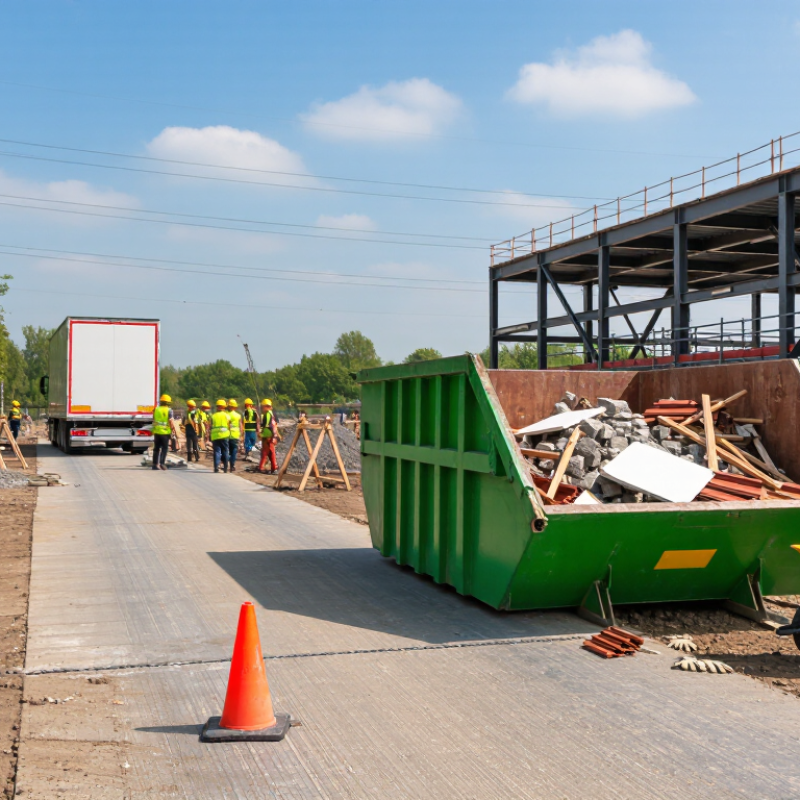
Placement affects workers, neighbors, and collection crews. Set the container on stable ground, away from trenches, weak slabs, fire lanes, and building entrances. OSHA’s construction guidance emphasizes maintaining clear access and controlling struck-by hazards. That matters: the U.S. Bureau of Labor Statistics recorded 1,075 construction fatalities in 2023. A dumpster cannot create a new traffic conflict. Use cones, reflective markings, and lighting when visibility is poor. Keep pedestrians separate from reversing vehicles whenever possible.
Do not place it beneath power lines or near exposed utilities without checking clearances. Confirm local restrictions, site plans, and utility markings with the responsible site supervisor. OSHA identifies overhead power lines and vehicle movement as serious construction hazards. Cover loose waste, never overfill the container, and inspect the placement after heavy rain or freezing weather. The first layout is not always right. Conditions change. A safer decision may require moving the dumpster, even when that costs extra time.
Compare Rental Terms, Costs, and Waste Restrictions
How to Choose a Construction Site Dumpster?
A construction dumpster should match your project’s waste stream, schedule, and available space. Measure the placement area before ordering. Leave room for delivery access and safe loading. I once underestimated demolition debris and needed an extra pickup. That mistake increased both cost and delays.
Compare rental terms carefully. Ask how many days the base price includes. Confirm delivery, pickup, and extension fees in writing. Some agreements include a weight allowance, while others charge by the ton. Clarify overage rates before the container arrives. A low advertised price may become expensive after added tonnage, fuel charges, or extra rental days. Keep a simple waste estimate, but treat it as an estimate.
Waste restrictions deserve equal attention. Construction debris may include concrete, timber, drywall, roofing, and metal. Materials often restricted include paint, fuel, chemicals, batteries, tires, and asbestos-containing products. Never place uncertain materials inside the container. Ask the rental provider or local waste authority for written guidance. Separate heavy concrete from mixed debris when possible. This can improve loading efficiency and reduce unexpected charges. Keep the container below its fill line, and do not allow debris to hang over the sides. Rules vary by location, so assumptions can be costly.
How to Choose a Construction Site Dumpster?
Compare typical rental terms, planning costs, capacity, and waste restrictions
Waste restrictions: Hazardous chemicals, paint, asbestos, refrigerants, batteries, tires, medical waste, and liquids are commonly prohibited. Concrete, brick, soil, and asphalt may require separate containers because of their high weight. Always confirm local limits, overage fees, permit requirements, and accepted materials before delivery.
Schedule Delivery, Pickup, and Responsible Waste Disposal
How to Choose a Construction Site Dumpster?
Schedule delivery before demolition begins, not when debris already blocks the driveway. Measure the placement area carefully, including overhead wires and turning space. A small dumpster may require extra pickups, while an oversized container can waste money. Ask about weight limits, delivery windows, and surface protection. Keep the access route clear. Delivery delays can stop an entire crew.
Pickup timing deserves equal attention. Estimate debris volume from daily work, then add a modest buffer for weather or material changes. Request pickup before the container reaches the fill line. Overfilled waste can spill during transport and create safety problems. On busy sites, a fixed pickup day may fail. Flexibility matters more than a perfect calendar.
Responsible disposal starts with sorting. Keep concrete, wood, metal, soil, and mixed waste separated when practical. This can reduce landfill use and improve recovery rates. Confirm which materials the facility accepts before loading the dumpster. Never hide unfamiliar materials under ordinary debris. Ask where the waste goes and whether recycling or reuse is available. Cover loose material during windy conditions. I have seen careful planning fail because one late delivery changed everything. Review the schedule each morning, even when the original plan seems reliable.
How to Choose a Construction Site Dumpster? - Schedule Delivery, Pickup, and Responsible Waste Disposal
| Dumpster Size | Approx. Capacity | Typical Exterior Dimensions | Suitable Construction Waste | Typical Weight Limit | Recommended Rental Period | Delivery and Pickup Planning | Responsible Disposal Guidance |
|---|---|---|---|---|---|---|---|
| 10 cubic yards | About 10 cubic yards, or approximately 3.8 cubic metres | Approximately 12 ft L × 8 ft W × 3.5 ft H | Small bathroom or kitchen renovations, concrete-free demolition, flooring, drywall, and limited landscaping debris | Usually 1–3 tons; confirm the local container limit before loading dense materials | 3–7 days for a small project | Schedule delivery at least 1–2 business days before work begins; request pickup when the container is about 75–80% full | Separate clean wood, metal, cardboard, and recyclable materials whenever local facilities accept them |
| 20 cubic yards | About 20 cubic yards, or approximately 15.3 cubic metres | Approximately 22 ft L × 8 ft W × 4 ft H | Roofing materials, drywall, framing lumber, flooring, cabinets, and moderate residential remodeling debris | Usually 2–4 tons; heavy debris may require a lower fill level | 5–10 days for a medium renovation | Reserve delivery 2–3 business days ahead; keep the access route clear for the delivery truck and planned pickup | Keep paint, solvents, oils, batteries, appliances, and electronic waste out of the container unless specifically approved |
| 30 cubic yards | About 30 cubic yards, or approximately 22.9 cubic metres | Approximately 22 ft L × 8 ft W × 6 ft H | Large home renovations, commercial interior demolition, roofing replacement, and bulky non-hazardous debris | Usually 3–5 tons, subject to local road and disposal restrictions | 7–14 days for a substantial project | Arrange delivery 3–5 business days ahead; coordinate pickup with demolition milestones to avoid unused rental days | Use separate collection for reusable fixtures and sorted metal; do not mix regulated or hazardous materials with general debris |
| 40 cubic yards | About 40 cubic yards, or approximately 30.6 cubic metres | Approximately 22 ft L × 8 ft W × 8 ft H | Major commercial construction, full-building cleanouts, large demolition projects, and high-volume lightweight debris | Usually 4–8 tons; heavy materials should be placed in smaller containers or handled separately | 7–21 days depending on project phases | Plan 5 or more business days in advance; verify truck clearance, overhead obstructions, surface strength, and local placement rules | Prioritize recycling and material recovery for concrete, asphalt, metals, wood, and clean cardboard before final disposal |
| Specialty heavy-debris container | Often 10–20 cubic yards, depending on local weight restrictions | Commonly about 12–22 ft L × 8 ft W × 2–4 ft H | Concrete, brick, block, asphalt, soil, and other dense mineral materials | Weight limits vary significantly; dense materials can exceed legal hauling limits before the container is full | 1–7 days for demolition or excavation work | Confirm accepted materials, maximum load, and access requirements before delivery; arrange prompt pickup after loading | Send clean concrete, asphalt, brick, and soil to approved recovery or recycling facilities where available; never mix asbestos-containing materials |
Related Posts
-
5 Best Construction Garbage Bins for Global Buyers
-
Top 5 Construction Trash Bin Rental Options for Your Project?
-
Understanding the Factors Influencing the Cost of Construction Dumpsters for Your Next Project
-

2026 Best Construction Site Dumpster Options for Your Project?
-

Top 10 Benefits of Using Rental Containers for Construction Projects
-
2026 Top Jobsite Dumpsters for Construction Waste Disposal?