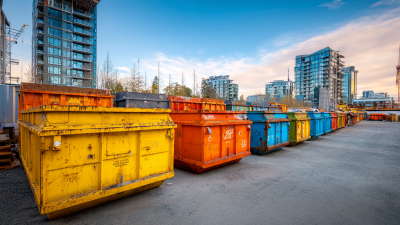
5 Best Construction Garbage Bins for Global Buyers
Choosing the right construction garbage bin is more than a purchasing decision. It affects site safety, labor time, transport costs, and material recovery. A bin placed beside a concrete mixer should not serve the same purpose as one used near a carpentry area.
The scale of the issue is substantial. The U.S. Environmental Protection Agency estimated that the United States generated about 600 million tons of construction and demolition debris in 2018. The World Bank also reported that global waste could reach 3.4 billion tonnes annually by 2050. These figures make practical waste separation increasingly important. Small sites feel this pressure too.
A reliable construction garbage bin should match the waste type, loading method, available space, and collection schedule. Steel roll-off bins suit heavy rubble. Enclosed bins help control dust and rainwater. Smaller wheeled containers can work better inside narrow renovation sites. It is not always the largest bin that performs best.
Construction-waste researcher Professor Vivian W. Y. Tam has emphasized, “Waste management must be considered from the beginning of the construction project.” That principle remains useful. A bin selected after work begins may already be the wrong size.
This guide compares five construction garbage bin options for global buyers. It considers capacity, durability, mobility, safety features, and environmental practicality. Some recommendations may need adjustment. Local hauling systems, climate, and site access can change the result. Perfect choices are rare. Better planning is still possible.
Sources: U.S. EPA, Advancing Sustainable Materials Management: 2018 Fact Sheet; World Bank, What a Waste 2.0.
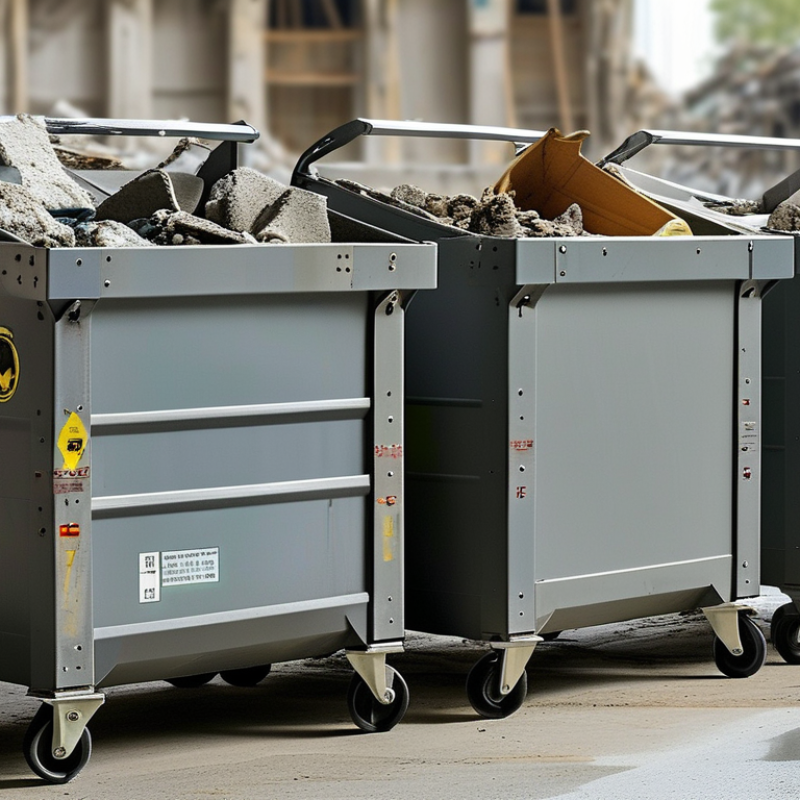
Roll-Off Dumpsters: 10–40 yd³ for Large-Scale Demolition Loads
5 Best Construction Garbage Bins for Global Buyers
Roll-Off Dumpsters: 10–40 yd³ for Large-Scale Demolition Loads
For demolition work, roll-off dumpsters from 10 to 40 yd³ handle heavy, irregular debris. A 10 yd³ bin suits bathroom removal, masonry patches, or small interior projects. A 20 yd³ model fits kitchen demolition and moderate concrete waste. Larger 30 and 40 yd³ bins support structural tear-outs, roofing debris, and mixed construction loads. Capacity is not the only concern. Weight limits matter just as much.
On active sites, I have seen crews choose a larger bin and still overload it with concrete. That creates handling problems and may exceed local transport limits. A 30 yd³ dumpster often works well for bulky timber and drywall, while a 40 yd³ unit needs generous access space. Check the truck route, ground strength, loading height, and placement rules before delivery. Small oversights can delay the whole shift.
Tips: Estimate debris volume, then add about 10% spare capacity. Keep dense materials low and distribute them evenly. Do not mix prohibited materials or hazardous waste with ordinary construction debris. Ask the supplier about maximum weight, door access, rental time, and regional requirements. My own planning mistake was ignoring turning clearance. The bin arrived, but the truck could not position it safely. Measure twice.
Hook-Lift Bins: 10–40 yd³ for Multi-Site Construction Logistics
Hook-lift bins are practical workhorses for multi-site construction logistics. Their 10–40 yd³ capacity supports concrete fragments, timber, plasterboard, and mixed renovation waste. A 10 yd³ bin suits narrow urban sites and lighter daily loads. Larger 30–40 yd³ units reduce collection trips on demolition projects.
The U.S. Environmental Protection Agency estimated 600 million tons of construction and demolition debris in 2018. That volume shows why predictable container rotation matters. The World Bank’s What a Waste 2.0 report also projects global waste could reach 3.4 billion tonnes annually by 2050. Hook-lift systems help contractors move full bins between sites without repeated loading. However, larger bins are not always better. Limited access, crane clearance, road strength, and local transport rules can change the safest choice. One overlooked problem is uneven loading. It can shift during lifting.
Tips: Measure the gate, turning radius, and overhead clearance before ordering. Confirm payload limits, drainage needs, and lifting compatibility with the truck fleet. Use separate bins for clean concrete, metals, timber, and mixed debris where recovery targets matter. Keep a simple site log. It reveals whether a 20 yd³ bin truly reduces trips or only increases waiting time. Waste data from the European Environment Agency also supports better separation, though real site conditions remain less tidy than planning sheets.
Skip Bins: 3–12 m³ for Space-Constrained Urban Projects
5 Best Construction Garbage Bins for Global Buyers
Skip bins between 3 and 12 m³ suit urban projects where access, safety, and collection timing matter. The European Commission reports that construction and demolition waste represents more than one-third of total waste generated in the European Union. That scale makes bin selection a practical control, not a minor purchase.
A 3 m³ bin fits narrow streets, small renovations, and basement work. A 6 m³ model handles mixed debris from a typical apartment floor. Larger 9–12 m³ bins suit demolition phases, but only where trucks can safely approach. The U.S. Environmental Protection Agency estimated 600 million tons of construction and demolition debris in 2018, over twice the volume of municipal solid waste. Separate bins for concrete, timber, metal, and mixed waste can improve recovery and reduce contamination.
Measure the turning radius.
Do not rely on volume alone. A deep 12 m³ skip may be unsuitable beside scaffolding or low utility lines. Weight limits also matter; concrete can fill a bin before reaching its visual capacity. Site teams should check loading height, lid options, drainage, and pickup frequency. Our first estimate is often imperfect. Weather, packaging, and unexpected demolition layers change the fill rate. A simple daily photo record can reveal whether a 3 m³ bin needs replacing too often or a 12 m³ unit creates unnecessary obstruction. EPA, European Commission, and local waste authority guidance should support the final specification.
Front-Load Bins: 2–8 yd³ for Routine Mixed-Debris Collection
5 Best Construction Garbage Bins for Global Buyers
Front-Load Bins: 2–8 yd³ for Routine Mixed-Debris Collection
Front-load bins from 2 to 8 yd³ suit routine mixed-debris collection on active construction sites. They handle packaging, drywall pieces, wood scraps, and small material offcuts. Smaller 2–4 yd³ bins fit tight urban sites and narrow service areas. Larger 6–8 yd³ units reduce pickup frequency for steady daily waste. In practice, the right size depends on debris volume, loading space, and collection schedules. A bin that is too large may waste space and encourage unsafe overloading.
Tips: Measure the placement area carefully. Leave clear access for lifting equipment. Check whether the bin has a fitted lid or drainage design. These details matter during rain and windy weather. Ask suppliers for steel thickness, finish quality, load limits, and compatible lifting dimensions. Specifications can vary between regions.
Reliable front-load bins should have reinforced corners, balanced lifting pockets, and smooth interior surfaces. These features support safer handling and easier emptying. Keep mixed debris below the rim, especially when workers add long boards or loose cartons. Local waste rules may also separate certain materials, so buyers should confirm requirements before ordering. I have seen projects choose capacity by appearance alone. That approach sometimes fails. Site records and weekly volume estimates provide better guidance. A simple trial period may reveal that a 4 yd³ bin works better than an assumed 8 yd³ model.
5 Best Construction Garbage Bins for Global Buyers — Front-Load Bins: 2–8 yd³ for Routine Mixed-Debris Collection
Front-load bins are commonly available in nominal capacities from 2 to 8 cubic yards. The chart compares five practical size options for routine mixed-debris collection. Liter values are converted using 1 cubic yard = 764.555 liters. Actual usable capacity depends on the fill line, loading method, and local collection requirements.
Compactor Bins: 20–40 yd³ with Up to 4:1 Volume Reduction
Among the five most practical construction garbage bins, compactor bins deserve close attention from global buyers. They commonly provide 20–40 yd³ of internal capacity. A hydraulic ram compresses loose material into denser loads. Depending on the waste mix, volume reduction can reach 4:1. Timber, packaging, and dry demolition debris usually compact well. Wet concrete and heavy masonry behave differently.
Space matters.
On a busy site, fewer collections can reduce vehicle traffic, labor interruptions, and disposal delays. I have seen operators fill a 30 yd³ bin too quickly because bulky timber was loaded without cutting. A simple size check would have prevented that problem. Buyers should review loading height, door design, drainage, and power requirements before ordering. The bin must also match local vehicle access and lifting equipment.
Waste density is critical. A 40 yd³ unit may not suit dense rubble, even when its volume appears attractive. Ask suppliers for verified compression ratios, cycle times, steel thickness, and maintenance access. Safety controls should include guarded moving parts, emergency stops, and clear operating instructions. Regional electrical standards and transport limits also need confirmation. My own preference is a slightly smaller bin with predictable loading, rather than a larger unit that becomes difficult to manage. Clearance around the ram can be overlooked. That detail matters.
| Bin Type | Nominal Capacity | Typical Volume Reduction | Recommended Construction Materials | Typical Footprint | Loading Configuration | Typical Payload Range | Best-Fit Use Case | Global Buyer Considerations |
|---|---|---|---|---|---|---|---|---|
| Compact Self-Contained Bin ★★★★★ Best for wet and mixed waste | 20 yd³ (about 15.3 m³) |
Up to 4:1 for compressible waste; commonly 2:1–3:1 for mixed construction debris | Packaging, insulation, drywall off-cuts, light renovation waste and damp debris | Approximately 6.5–8.0 m long × 2.4–2.6 m wide | Top loading with a sealed body; some configurations support rear or side access | About 4–8 metric tonnes, subject to local road limits and material density | Indoor or urban projects where leakage control, odor reduction and a compact footprint are important | Confirm three-phase electrical requirements, drainage provisions, weather protection and local vehicle compatibility |
| Heavy-Duty Stationary Compactor Bin ★★★★★ Best for high-volume job sites | 30 yd³ (about 22.9 m³) |
Typically 3:1–4:1 for packaging and light construction waste; lower for dense rubble | Timber off-cuts, cartons, plastic wrapping, insulation and non-hazardous mixed waste | Approximately 7.0–9.0 m long × 2.4–2.6 m wide | High-level or ground-level loading; requires a compatible stationary compactor and haul-away container | About 6–12 metric tonnes, depending on container design and transport regulations | Large commercial developments, fit-out projects and construction sites with continuous waste generation | Check dock height, container rail or hook dimensions, hydraulic connection standards and service access |
| Roll-Off Compactor Bin ★★★★☆ Best for flexible placement | 35 yd³ (about 26.8 m³) |
Approximately 3:1 for bulky light waste; up to 4:1 in suitable operating conditions | Demolition packaging, wood, light interior materials, plastics and general site waste | Approximately 7.5–9.5 m long × 2.4–2.6 m wide | Open top, walk-in door or controlled side loading, depending on the container design | About 8–15 metric tonnes; dense materials may reach legal weight limits before filling the bin | Sites that need scheduled haulage, relocation flexibility and high daily waste throughput | Verify hook-lift or cable-hoist compatibility, ground bearing capacity, clearance and maximum transport height |
| Low-Profile Compactor Bin ★★★★☆ Best for restricted-height locations | 25 yd³ (about 19.1 m³) |
Typically 2:1–3:1 for mixed construction waste; higher ratios require more compressible feedstock | Drywall, flooring off-cuts, cabinetry, packaging and light renovation debris | Approximately 6.5–8.5 m long × 2.4–2.6 m wide; reduced loading height | Ground-level or low-height top loading; optional access door on selected designs | About 4–9 metric tonnes, depending on the waste stream and haulage rules | Basements, indoor renovation zones, retail sites and projects with overhead clearance limits | Measure doorways, ramps, turning radii and ceiling clearance; confirm whether a low-height transport unit is available |
| Extra-Large High-Capacity Compactor Bin ★★★★☆ Best for major infrastructure projects | 40 yd³ (about 30.6 m³) |
Usually 2:1–3:1 for mixed construction debris; up to 4:1 for highly compressible materials | Large-scale packaging waste, timber, insulation, plastics and non-hazardous demolition materials | Approximately 8.0–10.0 m long × 2.4–2.6 m wide | Open-top or mechanical top loading; may require dedicated loading equipment | About 10–18 metric tonnes, constrained by container rating, axle limits and local regulations | Infrastructure, industrial expansion and multi-building projects with limited collection frequency | Review road access, turning space, crane or loader reach, maximum gross vehicle weight and export documentation |
Related Posts
-
How to Choose the Right Construction Waste Dumpster for Your Next Project: A Complete Guide
-
Top Benefits of Using a 10 Yard Concrete Dumpster for Your Next Project?
-
Top 10 Best Construction Disposal Containers for Efficient Waste Management
-
Best Construction Garbage Bin for Global Buyers?
-
2026 Best Jobsite Dumpsters for Global Buyers?
-
Top Benefits of Construction Container Rental for Your Next Project?