
Best Jobsite Dumpsters from China for Sale
Choosing jobsite dumpsters from China for sale takes more than comparing prices. The right container should match the worksite, hauling method, and debris volume. A renovation crew may need a compact roll-off for a narrow driveway, while a demolition project may require heavier steel and reinforced corners. Small details matter.
This guide explores dumpster styles, materials, capacities, and supplier checks that buyers can use when comparing options. Look closely at dimensions, wall thickness, door design, lifting points, and finish quality. Ask for current photos, drawings, and clear specifications—not just a product listing. A sample inspection or independent quality check may also help, especially for larger orders. Shipping costs and lead times deserve attention too; the lowest factory quote may not reflect the full delivered cost.
Reliable suppliers should answer practical questions directly and explain how products are made and inspected. Still, a polished catalog cannot prove performance on a muddy, crowded jobsite. That takes verification. Consider how the dumpster will be loaded, moved, emptied, and stored between projects. This article offers a grounded starting point for evaluating Chinese manufacturers and narrowing your choices. Some requirements may only become clear after a real site assessment, and that uncertainty is worth acknowledging. A well-matched dumpster can support safer, smoother cleanup, but buyers should confirm every specification before placing an order.
What Jobsite Dumpsters Are and Where They Are Used
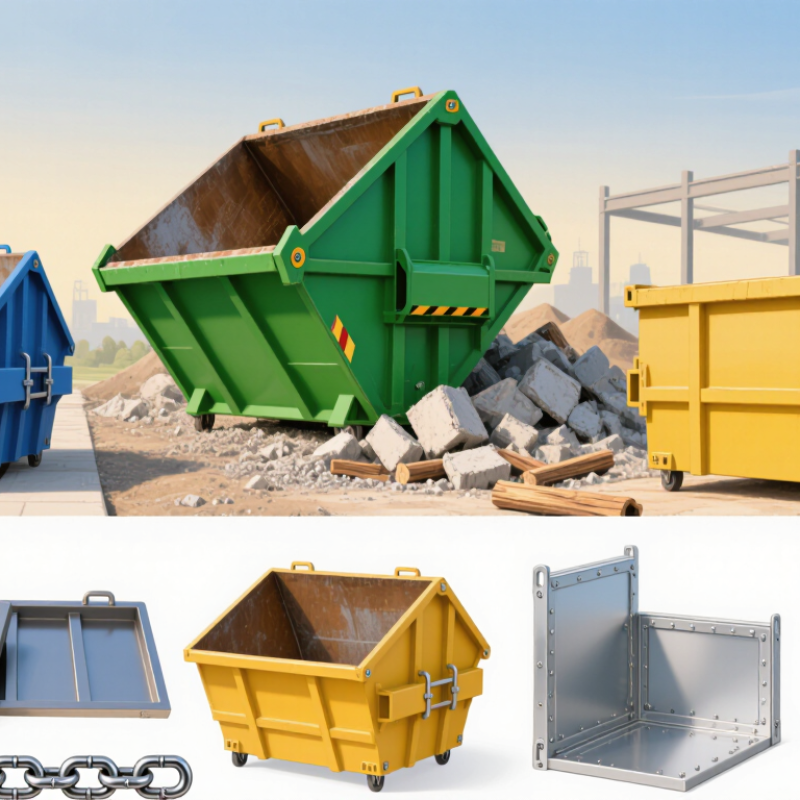
A jobsite dumpster is a durable container that holds debris close to where work happens. It helps crews collect scrap wood, drywall, packaging, and other construction waste instead of leaving it scattered across the site. Sizes and designs vary. Some containers suit compact renovation projects, while larger units handle bulky material from demolition or roofing jobs. The right choice depends on available space, the kind of debris, and how often the container can be emptied. Small details matter.
These dumpsters are used at building sites, home renovations, commercial fit-outs, roofing projects, and landscaping jobs. On a narrow residential street, a compact unit may leave room for workers and equipment. At a larger site, several containers can separate heavy rubble from lighter packaging. A practical check: measure the placement area and access route before choosing a size. A container that fits on paper may still block a gate or delivery path. When sourcing a jobsite dumpster from China, compare usable capacity, steel thickness, lifting points, door design, and finish quality. Request clear specifications and photos of welds and hinges. Product descriptions do not always show how a unit performs after repeated loading. That uncertainty is worth discussing with the supplier before purchase.
Best Jobsite Dumpsters from China for Sale - What Jobsite Dumpsters Are and Where They Are Used
| Dumpster Type | Typical Capacity | Approximate Dimensions | Common Jobsite Uses | Suitable Materials | Practical Considerations |
|---|---|---|---|---|---|
| 10-Yard Roll-Off Dumpster | About 10 cubic yards | Typically 12–14 ft long × 7–8 ft wide × 3–4 ft high | Small renovations, bathroom or kitchen remodels, and compact construction sites | Mixed construction debris, wood, drywall, and small amounts of roofing material | Its lower sides can make loading bulky debris easier. Check local weight limits before disposing of heavy materials. |
| 20-Yard Roll-Off Dumpster | About 20 cubic yards | Typically 20–22 ft long × 7–8 ft wide × 4–5 ft high | Residential construction, medium-sized renovations, and roofing or flooring projects | Wood, drywall, cabinets, flooring, and general non-hazardous construction waste | A versatile size for many projects. Confirm that the placement area has enough length and truck access. |
| 30-Yard Roll-Off Dumpster | About 30 cubic yards | Typically 20–22 ft long × 7–8 ft wide × 6 ft high | Large renovations, new-home construction, and commercial tenant improvements | Bulky construction debris, packaging, wood, drywall, and mixed non-hazardous waste | Higher sidewalls provide more volume but may make hand-loading less convenient. Keep debris below the top edge. |
| 40-Yard Roll-Off Dumpster | About 40 cubic yards | Typically 20–22 ft long × 7–8 ft wide × 7–8 ft high | Large commercial projects, demolition work, and high-volume construction sites | Large quantities of light, bulky debris such as wood, drywall, and packaging | Requires substantial placement space and is generally better suited to bulky, lighter waste than dense materials. |
| Low-Side Roll-Off Container | Commonly 10–20 cubic yards | Dimensions vary; sidewalls are lower than those of standard containers | Roofing, masonry, soil, and other projects where material is loaded by hand or equipment | Roofing tear-off, concrete, brick, soil, and other dense materials, subject to rated limits | Dense waste can reach the container’s weight limit before it is full. Verify the container rating and hauling rules. |
| Enclosed Jobsite Container | Varies by design; often smaller than open-top roll-offs | Varies according to access doors, enclosure, and transport system | Sites needing controlled access, weather protection, or secure storage for selected waste | Bagged waste, recyclable materials, or items that need protection from rain and unauthorized access | Check door clearance, loading method, ventilation, and whether the container is designed for waste hauling or storage. |
Jobsite dumpsters are heavy-duty containers used to collect and transport construction, renovation, demolition, or site-cleanup waste. Dimensions and capacities are approximate industry examples; actual specifications, payload ratings, door configurations, and local disposal rules vary by container design and service provider.
Related Posts
-
Why Choose Construction Trash Containers for Your Project?
-
2026 Best Jobsite Dumpsters for Global Buyers?
-
Top 10 Best Construction Disposal Containers for Efficient Waste Management
-
2026 How to Choose the Right Construction Disposal Containers for Your Project?
-
Best Construction Garbage Containers to Buy for Your Project?
-
Best Construction Dumpster Options for Global Buyers?