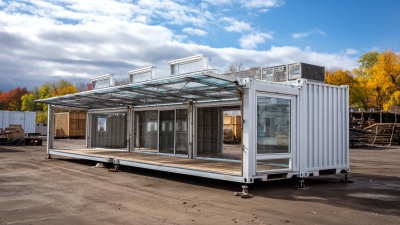
10 Best Construction Site Storage Containers?
Choosing among construction site storage containers is rarely as simple as comparing size and price. A busy site needs secure, practical storage that survives rain, dust, impacts, and constant movement. Tools, fasteners, electrical equipment, and protective gear must remain organized and accessible.
This guide examines ten strong container options for different construction environments. The comparison considers steel quality, weather resistance, ventilation, locking systems, internal capacity, transport, and placement requirements. It also considers daily handling, because a container can look excellent online yet feel awkward beside a muddy access route. Experienced site managers know that door clearance and delivery access matter more than many product descriptions suggest.
Small details matter.
A reliable container should support safer routines without creating unnecessary delays. Shelving compatibility, floor strength, condensation control, and inspection access deserve close attention. Some units suit compact renovation sites, while others support large commercial projects with heavier storage demands. No option is perfect. A lower-cost model may save money initially but require better weatherproofing or added organization. A premium unit may offer stronger protection but exceed a small contractor’s practical needs. This list aims to present balanced choices rather than declare one universal winner. Product specifications should still be checked carefully before purchase or rental. Site conditions change, and my preferred option could be unsuitable on another project. The best decision matches the container to the materials, workforce, climate, and planned storage duration.
What Are Construction Site Storage Containers?
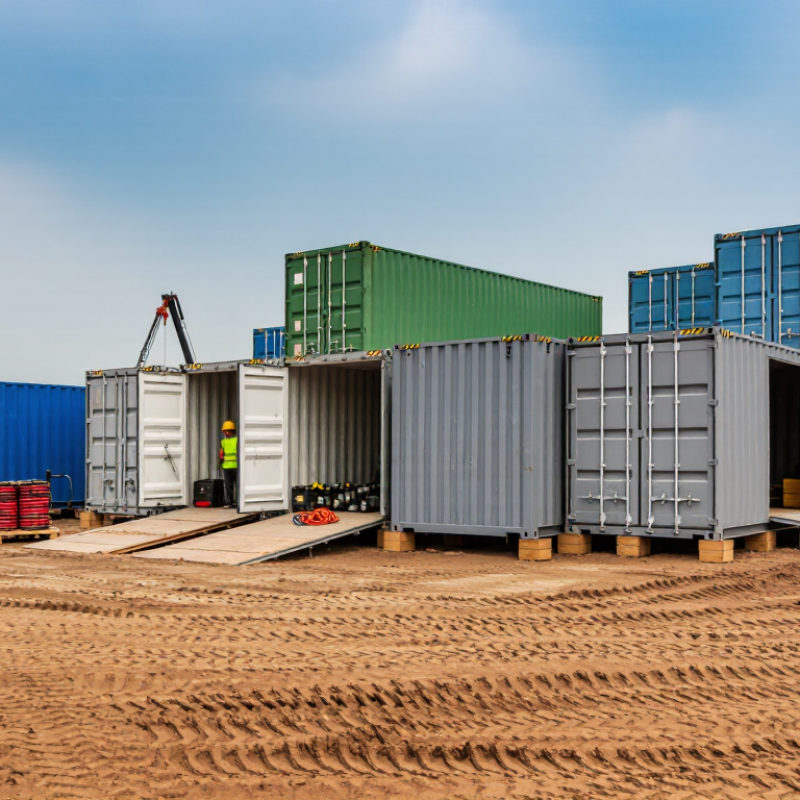
Construction site storage containers are strong, enclosed units placed near active work areas. They protect tools, fasteners, equipment, and building materials from rain, dust, and accidental damage. Not ordinary boxes. Most use reinforced steel walls, lockable doors, ventilation points, and raised floors. These features help crews store supplies without using valuable indoor space.
In my site experience, good storage begins with access. Workers should reach frequently used tools quickly, even while wearing gloves. Wide doors, stable flooring, and clear internal aisles reduce unnecessary lifting and searching. Weather resistance also matters. Sealed joints can limit water entry, while ventilation helps reduce condensation on metal surfaces. A level, well-drained position is essential. Space matters.
Container size should match the project, not personal preference. An oversized unit may create unused corners and encourage poor organization. A small unit can force materials into unsafe piles. I have seen teams misjudge this balance. Their container looked suitable during delivery, then became crowded within weeks. Regular inspections can reveal damaged hinges, loose locks, blocked vents, or wet packaging. Security depends on more than a strong door; controlled access and an updated inventory record matter too. Even experienced crews miss details. That is why storage planning should change as the construction schedule develops.
Key Features of the Best Site Storage Containers
The best site storage containers protect tools from rain, dust, theft, and accidental damage. Strong steel panels, welded seams, and corrosion-resistant coatings matter in muddy conditions. A raised floor prevents puddles from reaching power tools and fasteners. Shelving should support heavy loads without blocking walkways. OSHA’s construction standards, including 29 CFR 1926.25, require debris and materials to be kept orderly. Storage design supports that requirement, but it cannot replace daily inspections.
Security needs more than a padlock. Look for reinforced doors, concealed hinges, lock boxes, and tamper-resistant hasps. Good ventilation reduces condensation after cold nights. Interior lighting improves visibility during early shifts. Clear labels and a simple digital inventory reduce searching time. The Associated General Contractors’ 2024 workforce survey found that 94% of construction firms struggled to fill open positions. Organized storage can save skilled workers from wasting minutes on missing equipment. That benefit is easy to underestimate.
Tips: Measure the largest item before ordering. Leave a clear path near the door. Store chemicals only in approved, properly separated areas. Check door seals after heavy rain. A container may look secure but still fail when its floor flexes under a loaded pallet. Photograph contents weekly, and review the layout after each project phase. Perfect organization rarely lasts. Regular correction matters more.
10 Best Construction Site Storage Container Types
Construction sites need storage that survives dust, rain, vibration, and hurried loading. The ten best construction site storage container types include steel shipping containers, portable tool chests, lockable gang boxes, mobile storage trailers, modular site containers, mesh security cages, weatherproof cabinets, pipe racks, lumber racks, and small-parts cabinets. Each type serves a different purpose. Steel containers hold bulky materials, while tool chests keep drills, fasteners, and measuring equipment organized. Modular units work well when site space changes during a project.
Choose based on access, capacity, mobility, and security. A steel container may protect cement boards and boxed equipment, but poor ventilation can create condensation. Add raised pallets and inspect the roof after heavy rain. Mobile trailers save handling time, although uneven ground can make positioning difficult. Mesh cages improve visibility and airflow, but they offer less weather protection. In my experience, teams often buy the largest unit available and regret the wasted floor space. Measure actual inventory first.
Tips: Group items by daily use, not only by material type. Keep heavy tools near the doors. Use labeled bins for small parts. Leave clear walking space inside every container. Check locks, hinges, flooring, and water entry weekly. A simple inspection sheet helps supervisors notice repeated problems. Storage plans should change as the project develops. What works during foundation work may fail when finishing materials arrive.
10 Best Construction Site Storage Container Types
Typical internal storage capacity comparison for commonly used construction-site containers. Actual capacity may vary by design, insulation, doors, and internal fittings.
Key insight: Forty-foot high-cube containers generally provide the greatest storage capacity, while 10-foot units are better suited to compact sites with limited access or smaller material volumes.
How to Compare Size, Security, Mobility, and Cost
Choosing among ten construction site storage containers starts with your materials and workflow. Measure the largest tool, pallet, and future delivery, not only today’s inventory. A 20-foot unit may hold equipment comfortably, yet waste space on a narrow urban site. Leave a clear aisle for hand trucks and safe access. Keep it practical. I have seen teams underestimate door clearance and stack items against walls. That mistake slows every morning’s setup. Good planning begins with a simple inventory and a site sketch.
Security should match the site’s exposure, not just the container’s steel walls. Check welded hinges, a protected lock area, strong door bars, and weather-resistant seals. Add internal lighting and a basic inventory log for accountability. Security is a system. Place the unit where supervisors can see it, away from public edges and standing water. Ask about inspection records, repairs, and fire-safety requirements before delivery. “Fully secure” means little without maintenance evidence.
Mobility affects both rental cost and scheduling. Units with forklift pockets or lifting points are easier to reposition. Moving them still requires trained operators and stable ground. Compare delivery, pickup, permits, insurance, rental, and possible damage fees. The cheapest weekly rate can become expensive after repeated moves. Consider ventilation, shelving, ramps, and power as separate costs. I would document the container’s condition with dated photos. My preference may be wrong; a smaller unit can reduce clutter, while a larger one prevents unsafe stacking. Review the choice after two weeks of actual use.
10 Best Construction Site Storage Containers? - How to Compare Size, Security, Mobility, and Cost
| Option | Typical External Size | Approx. Internal Capacity | Security Level | Mobility | Weather Protection | Typical Purchase Cost (USD) | Typical Rental Cost (USD/month) | Best Use |
|---|---|---|---|---|---|---|---|---|
| 1. Compact Steel Site Box | 4 ft × 2 ft × 2 ft | About 16 cu. ft. | ★★★★☆ Lockable steel lid and reinforced hinges |
Forklift pockets; easy to move when empty | Good for outdoor hand tools when properly closed | $450–$900 | Usually not rented separately | Small tools, fasteners, survey equipment, and personal protective equipment |
| 2. Medium Steel Tool Chest | 6 ft × 3 ft × 3 ft | About 54 cu. ft. | ★★★★☆ Heavy-gauge steel body with hasp or built-in lock |
Forkliftable; suitable for repeated repositioning | Good, although raised placement is recommended in flood-prone areas | $900–$1,800 | $75–$160 | Daily-use tools, cords, hoses, and compact equipment |
| 3. Large Steel Site Box | 8 ft × 4 ft × 4 ft | About 128 cu. ft. | ★★★★★ Reinforced doors, tamper-resistant hasp, and heavy steel panels |
Forklift pockets; requires lifting equipment when loaded | Very good with sealed doors and intact roof coating | $1,600–$3,200 | $140–$280 | High-value tools and shared equipment on medium-sized sites |
| 4. 10-Foot Shipping Container | 10 ft × 8 ft × 8 ft 6 in | About 560 cu. ft. | ★★★★★ Locking cargo doors with optional protected lock box |
Requires a truck, crane, or specialized delivery equipment | Excellent when structurally sound and placed on level supports | $2,500–$5,000 | $120–$250 | Limited-access sites needing secure bulk storage without a large footprint |
| 5. 20-Foot Shipping Container | 20 ft × 8 ft × 8 ft 6 in | About 1,170 cu. ft. | ★★★★★ Steel construction, locking cargo doors, and lock-box compatibility |
Transportable, but relocation requires a suitable trailer or lifting system | Excellent; inspect door gaskets, roof, floor, and corner posts | $3,000–$6,500 | $150–$300 | General construction materials, tools, temporary inventory, and site offices |
| 6. 40-Foot Shipping Container | 40 ft × 8 ft × 8 ft 6 in | About 2,350 cu. ft. | ★★★★★ Heavy steel body with secure cargo-door locking points |
Least mobile after delivery; needs substantial access and lifting capacity | Excellent when maintained and supported correctly | $4,500–$9,000 | $220–$450 | Large projects with high material volume and a long site duration |
| 7. Side-Door Storage Container | 20 ft × 8 ft × 8 ft 6 in | About 1,150–1,170 cu. ft. | ★★★★★ Lockable end doors plus a lockable side opening |
Requires lifting or specialized transport; access is easier after placement | Excellent when all door seals and locking bars are maintained | $4,000–$8,000 | $200–$400 | Sites that need frequent access to materials along the container’s full length |
| 8. Open-Side Construction Container | 20 ft × 8 ft × 8 ft 6 in | About 1,150 cu. ft. | ★★★★☆ Multiple lockable panels; more access points require careful inspection |
Transportable with standard container-handling equipment | Very good when every panel is fully closed and sealed | $5,000–$10,000 | $250–$500 | Palletized materials and projects where loading from the side saves labor |
| 9. Mobile Storage Trailer | Approximately 28–53 ft long × 8 ft wide | About 2,000–4,000 cu. ft. | ★★★★☆ Lockable rear doors; security depends on site controls and trailer condition |
High mobility; can be relocated by a road-legal tractor unit | Good to very good; inspect roof, seals, floor, and door hardware | $8,000–$30,000 used | $700–$1,800 | Projects requiring rapid relocation or temporary warehousing near multiple work areas |
| 10. Insulated Modular Storage Unit | 20 ft × 8 ft × 8 ft 6 in | About 1,000–1,150 cu. ft. | ★★★★☆ Lockable steel doors with improved protection for sensitive contents |
Relocatable by crane or specialized transport | Very good; insulation reduces condensation and temperature swings | $8,000–$20,000 | $400–$900 | Electrical components, finished materials, tools, and supplies sensitive to moisture or temperature |
How to Choose the Right Container for Your Project
The best construction site storage container depends on the project, not the sales list. A steel unit suits tools and materials needing weather resistance, while a ventilated container works better for damp equipment. Measure your largest item first. Then allow clear walking space, shelving depth, and door swing clearance.
A container that barely fits today may become useless next month.
Access matters. Check delivery routes, ground conditions, lifting points, and the distance from storage to active work areas. The Associated Builders and Contractors’ 2024 workforce analysis estimates that construction will need 454,000 additional workers in 2025.
Better storage can reduce searching and repeated handling, but only when items remain visible and logically arranged. Labels help. So does lighting.
Safety cannot be an afterthought. OSHA’s Focus Four analysis identifies falls, struck-by incidents, caught-in or between incidents, and electrocution as major causes of construction fatalities.
Keep containers stable, dry, and clear of blocked exits. Use ventilation where heat or moisture could damage contents, and select locking hardware suited to the site’s exposure.
McKinsey Global Institute’s report, Reinventing Construction, found construction productivity had grown only about 1% annually over two decades. That makes small workflow gains valuable.
I would not assume the largest container is best. It may encourage clutter.
One detail is easy to miss: review the layout after one week, because real site behavior often exposes flaws in the original plan.
Related Posts
-
Innovative Uses of Construction Containers That Transform Projects and Save Costs
-
Transform Your Construction Site Efficiency with Innovative Storage Container Solutions
-
2025 Top 5 Construction Site Storage Containers for Ultimate Security and Efficiency
-
Why Are Construction Site Storage Containers Essential for Efficiency?
-

Top 10 Container Rental Services at China Import Expo?
-
How to Choose Rental Containers for Construction?