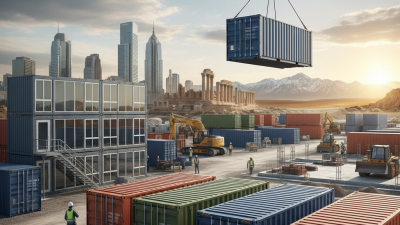
How to Choose Rental Containers for Construction?
Choosing rental containers for construction is not simply a matter of comparing weekly prices. The right unit must match the site, schedule, materials, and working conditions. A ten-foot container may fit beside a narrow urban project, while a forty-foot unit could better serve a large commercial build. Door placement, ventilation, shelving, weather resistance, and delivery access also matter. A container that looks affordable can become expensive when workers cannot reach it safely.
Construction logistics consultant Paul Salvati offers a practical reminder: “Choose the container around the work, not the other way around.” That principle supports better planning. Measure the available space before ordering. Check whether a delivery truck can approach the placement area. Consider muddy ground, overhead cables, crane movement, and changing storage needs. Tools, cement bags, protective equipment, and records may require different internal arrangements. A site office also needs lighting, power access, insulation, and comfortable ventilation.
The best rental containers for construction should support safety and daily efficiency. Ask the rental provider about inspection records, damage reporting, lock systems, and replacement procedures. Clear terms reduce unpleasant surprises. Still, planning is never perfect. Weather can change, deliveries can slip, and material quantities may grow. I have seen teams choose a smaller unit to save money, then pay for a second delivery within weeks. That decision looked reasonable at first. It was not. A careful rental choice should leave enough flexibility for real construction conditions, not only the original drawing.
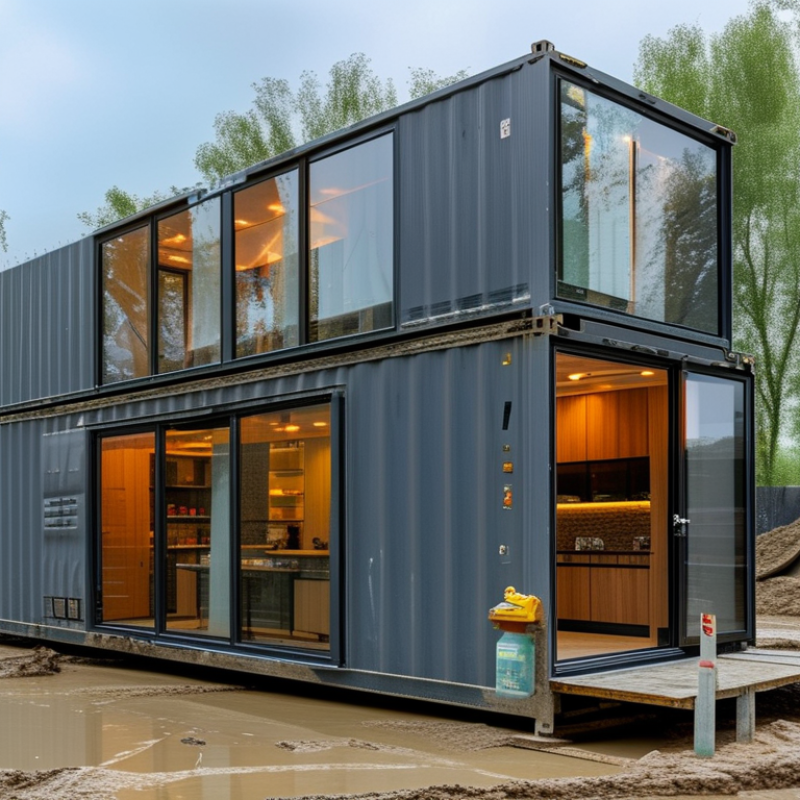
Define the Construction Project’s Container Requirements
Before choosing a rental container, define what the construction project must support each day. A storage unit for cement bags needs different conditions from a site office or welfare room. List the intended use, number of users, equipment size, and rental duration. Measure the available ground carefully, including door clearance and turning space for delivery vehicles. A container may fit on paper but fail beside scaffolding or temporary fencing.
Inspect the site’s surface, drainage, weather exposure, and access route. Level, compact ground helps prevent movement and uneven doors. Check whether the container needs lighting, ventilation, heating, shelving, or electrical connections. Protect sensitive tools from moisture and temperature changes. Security also matters, so identify lock requirements and visibility from active work areas. Experienced project teams should confirm these details with the site manager and rental provider before delivery.
Tips: Create a simple requirements sheet. Include dimensions, weight limits, access hours, ground conditions, power needs, and planned contents. Take photographs of the delivery path. They reveal obstacles measurements can miss. Leave some spare capacity; crowded storage slows work and increases damage risk. I have seen teams choose the cheapest size, then pay for a second unit weeks later. That decision looked efficient at first, but the original calculation was too optimistic. Recheck the plan when the workforce, materials, or construction schedule changes.
Compare Rental Container Types and Their Intended Uses
How to Choose Rental Containers for Construction?
Container selection should follow the work, not only the available footprint. Standard dry containers suit tools, cement bags, and boxed materials. Their steel walls provide basic weather protection and stronger security than temporary plastic storage. A 20-foot unit offers about 33 cubic meters of internal volume, while a 40-foot unit provides roughly 67 cubic meters. High-cube versions add approximately 30 centimeters of height, helping store tall frames or stacked pallets.
Open-top containers work better for bulky materials loaded by crane. Side-opening units improve access when workers need frequent handling along the container’s length. Office and welfare containers support supervisors, meetings, lockers, or drying rooms. Refrigerated units are useful for temperature-sensitive materials, although their energy demand and servicing needs can be underestimated. Poor planning here becomes expensive.
A 2024 analysis by Grand View Research identifies construction equipment rental as a large global market, supported by contractors seeking lower capital costs and flexible capacity. UNEP’s 2023 Global Status Report states that buildings and construction consume about 34% of global energy and create around 37% of energy-related emissions. Reusing rental units can support resource efficiency, but transport distance still matters. I have seen sites rent oversized containers “just in case.” That choice often wastes space and handling costs. Measure pallets, access routes, loading equipment, and rental duration before signing. The smallest workable option is not always the safest one.
How to Choose Rental Containers for Construction? - Compare Rental Container Types and Their Intended Uses
| Rental Container Type | Common Exterior Size | Approx. Usable Area | Intended Construction Uses | Main Advantages | Important Limitations | Typical Site Requirements | Best Choice When |
|---|---|---|---|---|---|---|---|
| Standard Dry Storage Container | 20 ft × 8 ft × 8 ft 6 in or 40 ft × 8 ft × 8 ft 6 in |
About 146 sq ft for 20 ft About kla288 sq ft for 40 ft |
Tools, small equipment, building materials, fixtures, pipes, cables, and jobsite supplies | Weather-resistant steel construction; lockable doors; large internal volume; widely available | Not designed for occupied workspaces; condensation may affect moisture-sensitive materials; limited natural light | Level, compacted ground; delivery access; sufficient clearance for truck placement and door operation | The primary need is secure, dry, general-purpose storage |
| High-Cube Storage Container | 20 ft × 8 ft × 9 ft 6 in or 40 ft × 8 ft × 9 ft 6 in |
About 150 sq ft for 20 ft About 285 sq ft for 40 ft |
Tall materials, scaffolding components, prefabricated assemblies, ductwork, and stacked supplies | Approximately one foot more internal height than a standard container; improves vertical storage capacity | Requires more overhead clearance; still has the ventilation and condensation limitations of enclosed steel storage | Level foundation; extra overhead clearance; suitable access for delivery equipment | Vertical storage space is more valuable than a lower overall height |
| Open-Side or Side-Opening Container | Usually 20 ft or 40 ft long with full-length side access |
Similar to the equivalent standard container | Long or bulky items, timber, panels, windows, structural components, and frequently accessed materials | Wide side opening simplifies loading; reduces the need to move items at the front of the container | Higher rental cost may apply; side doors need additional clearance; more door hardware requires inspection | Clear space along the opening side; level support; unobstructed delivery route | Materials are long, bulky, or accessed repeatedly during the project |
| Open-Top Container | Typically 20 ft or 40 ft long with a removable roof or tarp |
Similar floor area to the equivalent standard container | Tall machinery parts, oversized components, demolition debris, soil, and materials loaded by crane | Allows top loading; suitable for cargo that exceeds normal door height or is difficult to load from the end | Less weather protection when the roof is open; tarp systems are not a substitute for a fully sealed roof | Crane or lifting access; overhead working clearance; stable, level placement area | Top loading or extra vertical clearance is essential |
| Container Office | Usually 20 ft or 40 ft long with personnel doors and windows |
About 146–288 sq ft, depending on length and layout | Site management office, meeting room, document control area, security office, or temporary workspace | More suitable for regular occupancy; can include lighting, electrical outlets, insulation, heating, and cooling | Needs utility connections and regular maintenance; interior space is limited compared with a permanent building | Level placement; electrical supply; safe access; climate-control provisions where required | The project needs a secure, weather-protected administrative workspace |
| Mobile Welfare or Break Room Container | Commonly 10 ft, 20 ft, or 24 ft long with personnel access |
Approximately 70–175 sq ft, depending on configuration | Worker rest area, meal room, drying room, changing area, or temporary welfare facility | Can provide seating, heating, lighting, power, handwashing, and basic welfare amenities in one unit | Requires cleaning and servicing; capacity is limited; plumbing or waste systems may be needed | Stable ground; electrical connection; water and waste connections when fitted with plumbing | Worker welfare facilities must be provided close to an active construction area |
| Refrigerated Container | Usually 20 ft or 40 ft long with an insulated interior |
About 140–280 sq ft, depending on size and internal fittings | Temperature-sensitive materials, selected chemicals, temporary laboratory supplies, or perishable site provisions | Controlled temperature range; insulated walls; suitable for short- or medium-term temperature management | Consumes continuous electricity; requires temperature monitoring; not suitable for every hazardous substance | Reliable electrical supply; ventilation around the refrigeration unit; level placement and service access | Temperature control is necessary and the stored material is approved for this type of unit |
| Waste or Debris Container | Commonly 10–40 cubic yards or equivalent site skip/bin sizes |
Measured by internal volume rather than floor area | Concrete rubble, timber offcuts, packaging, soil, and non-hazardous demolition waste | Fast loading and removal; supports jobsite housekeeping and waste segregation | Must not receive prohibited or hazardous materials without appropriate authorization; weight limits apply | Firm, accessible placement area; clearance for collection vehicle; protection of nearby surfaces | The priority is collecting and removing construction waste rather than storing equipment |
| Hazardous-Material Storage Unit | Varies by local rental specification and required storage capacity |
Varies by unit design and bunded capacity | Approved storage of fuels, paints, solvents, or other regulated substances | May include spill containment, ventilation, security locking, warning labels, and fire-resistant features | Not interchangeable with a standard storage container; local regulations and substance compatibility must be verified | Regulatory compliance; separation from ignition sources; suitable ventilation; spill response equipment | The materials require controlled, compliant storage rather than ordinary jobsite protection |
Note: Dimensions, usable area, payload limits, equipment, and availability vary by local rental specification. Confirm delivery access, ground conditions, permitted contents, electrical requirements, and applicable safety regulations before booking.
Evaluate Size, Capacity, Materials, and Essential Features
How to Choose Rental Containers for Construction?
Size and capacity should match the work, not merely the available site space. A standard 20-foot container usually provides about 33 cubic meters of internal volume, while a 40-foot unit offers roughly 67 cubic meters. However, usable space decreases with shelving, tools, and protective packaging. Check both internal dimensions and maximum payload. A packed container can become unsafe before it looks full. The ISO 668:2020 standard defines common container dimensions, but rental units may differ because of age and repairs.
Material selection matters in harsh construction environments. Weather-resistant steel handles rain and impact better than lightweight temporary structures. Inspect the floor for rot, bending, or chemical damage. This is important when storing cement bags or dense equipment. The U.S. Environmental Protection Agency’s 2018 Construction and Demolition Debris Management report estimated 600 million tons of construction and demolition debris in one year. That figure supports careful capacity planning and separate storage zones. Still, waste volume varies widely by project, so published averages should not replace a site estimate.
Tips: Measure the largest tool first. Leave walking clearance. Ask for tare weight, payload, ventilation, lock protection, lighting, and ramp options. Photograph damage before delivery. A perfect choice is unlikely. Recheck the plan after one busy week; real sites often expose mistakes that drawings miss.
Check Delivery Conditions, Site Access, and Placement Needs
How to Choose Rental Containers for Construction?
Check Delivery Conditions, Site Access, and Placement Needs
A rental container may fit your storage plan but fail at the gate. Before delivery, measure the entrance, road width, turning space, and overhead clearance. Check for soft ground, sharp slopes, low branches, and temporary barriers. Share accurate site photos with the rental provider. A quick phone description is rarely enough.
Delivery timing matters too. Confirm the truck type, unloading method, weather limits, and required waiting space. Rain can turn a firm driveway into deep mud. Strong wind may also affect lifting operations. Keep workers, vehicles, and loose materials away from the unloading area. Ask who manages traffic during placement. Small details prevent expensive delays.
Placement needs deserve equal attention. Choose firm, level ground with enough space for doors to open fully. Leave access for daily loading, emergency movement, and future removal. Protect underground services before positioning the unit. I once planned a container beside a site office, then discovered the doors blocked a delivery route. The layout looked efficient on paper. It was not.
Recheck the plan after excavation, fencing, or machinery changes. Construction sites move quickly. A suitable location today may become unsafe next week. Document the agreed position and inspect the container after delivery for dents, leaks, and door alignment. Good records support reliable handover and practical site control.
Review Rental Costs, Terms, Safety, and Maintenance Responsibilities
How to Choose Rental Containers for Construction?
Rental price is only the visible part of the budget. Ask for delivery, collection, deposits, cleaning, and damage fees in writing. A low weekly rate can become expensive when transport is charged separately. Compare the full cost for the project period, not only the advertised daily price. Check whether the contract has a minimum rental term. Also confirm extension rates, cancellation rules, and return notice requirements. These details matter when weather or inspections delay the schedule.
Safety deserves direct attention. Inspect the container before signing, including doors, locks, floors, ventilation, lighting, and signs of water entry. Place it on stable, level ground with clear access for emergency services. Keep exits unobstructed. Local workplace rules may require specific fire protection or electrical checks, so verify them with a qualified safety professional. Never assume an older unit is suitable because it looks clean.
Maintenance duties should be divided clearly. The rental company may handle structural repairs, while the site team manages cleaning, access control, and reporting damage. Ask who responds to a broken lock or leaking roof, and how quickly. Take dated photographs at delivery. A small oversight can create a large dispute later. I have seen teams overlook mud around door seals, then blame the container after water entered. That assumption was avoidable. Keep inspection records, report problems promptly, and question any clause you cannot explain to the site supervisor.
Related Posts
-
Best Rental Containers for Construction Projects Worldwide?
-
Top 10 Construction Site Storage Containers for Global Buyers?
-
Top 10 Container Rental Services at China Import Expo?
-
Top 10 Benefits of Using Rental Containers for Construction Projects
-
Top 10 Benefits of Using Rental Containers for Construction Projects?
-
2026 How to Choose the Right Construction Disposal Containers for Your Project?