Top 10 Steel Coil Suppliers for Global Buyers
Choosing a Steel Coil Supplier is about more than comparing quoted prices. Global buyers must match material grades, coil dimensions, thickness tolerances, and surface finishes to the demands of their production lines. A mismatch can cause forming problems, excess scrap, or costly delays. Details matter.
Packaging and delivery deserve close attention, too. Steel coils may arrive with edge protection, moisture-resistant wrapping, and clear identification tags, yet packaging standards vary between suppliers. Buyers should check available mill test certificates, inspection records, production capacity, and shipping options before placing an order. Ask how the supplier handles specification changes or quality concerns. A prompt, documented response can reveal more than polished marketing.
This guide reviews ten suppliers relevant to international buyers, focusing on product range, manufacturing capabilities, service, and export experience. The comparison is intended to support early research, not replace technical checks or direct quotations. Supplier information can change, and a strong reputation does not guarantee that every order will fit a buyer’s requirements. That is worth remembering. Confirm current specifications, lead times, and commercial terms with each company, then compare offers on the same basis. A lower price may look attractive, but freight, protective packaging, and delivery reliability also affect the final cost. Reliable sourcing takes careful questions—and sometimes a second look.
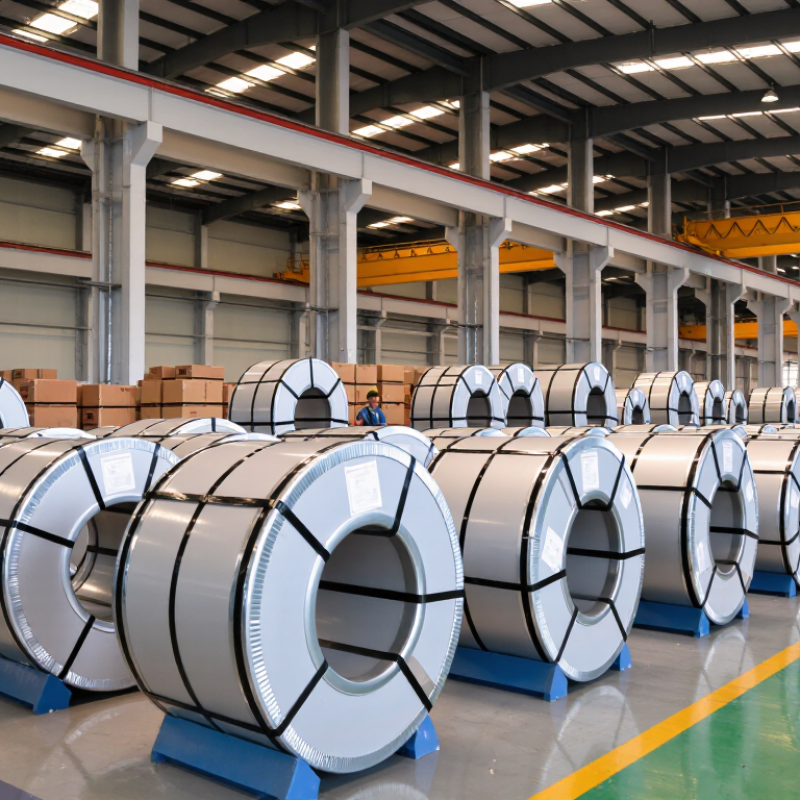
Steel Coil Suppliers: Industry Scope and Role in Global Trade
Steel coil suppliers connect mills, processors, and manufacturers across international markets. They help buyers source material in suitable grades, thicknesses, widths, and surface finishes. These choices affect production. A small thickness variation can change forming results or increase scrap, so clear specifications matter before an order is placed.
Their role extends beyond selling steel. Suppliers coordinate coil inspection, protective packaging, export documents, and transport schedules. A tightly wrapped coil may travel by truck, rail, or vessel before reaching a factory. Reliable communication helps buyers plan around shipping times and avoid costly production gaps. That takes discipline. Material test reports and traceability records can also help confirm that delivered coils match the agreed requirements.
Global trade is rarely simple. Freight costs shift, port delays occur, and regional expectations for documentation or packaging can differ. Experienced buyers compare more than quoted prices: they check available capacity, quality controls, delivery performance, and how quickly a supplier resolves discrepancies. Still, no supplier can remove every risk. Buyers should verify critical details themselves, especially for demanding applications. It is easy to assume that a familiar specification means identical results; in practice, processing history and handling can matter too.
How to Assess Steel Coil Suppliers for International Sourcing
Top 10 Steel Coil Suppliers for Global Buyers
How to Assess Steel Coil Suppliers for International Sourcing
Assess a steel coil supplier through evidence, not polished presentations. Request mill test certificates, heat numbers, chemical analysis, yield strength, and dimensional tolerances. Match every document with the physical coil. A missing heat number matters.
Review production capability against your specification. Ask about steel grade, thickness range, coil weight, surface finish, edge condition, and coating consistency. Inspect sample coils for scratches, telescoping, rust, and uneven winding. Small defects can create serious processing losses.
Check whether the supplier controls quality at several stages. Factory audits should examine calibration records, inspection equipment, packing methods, and complaint procedures. Independent inspection before shipment adds useful distance. It is not a perfect safeguard.
Study export performance carefully. Reliable suppliers provide clear lead times, moisture-resistant packaging, loading photographs, origin documents, and traceable shipping records. Confirm port experience and agreed trade terms in writing. Vague answers often become costly delays.
Ask for references from buyers with similar volumes and destinations. Compare payment conditions, production schedules, replacement policies, and communication speed. A low quotation may hide weaker tolerances or unstable delivery. That mistake is easy to make.
Supplier evaluation should also include responsible sourcing and compliance with applicable import, safety, and environmental rules. Keep a written comparison matrix. Score evidence, not promises. Then revisit your decision after the first shipment, because real performance can challenge an attractive audit.
Top 10 Steel Coil Suppliers and Their Business Profiles
Global buyers can compare ten distinct supplier profiles, rather than treating every steel coil producer as interchangeable. The World Steel Association reported 1.882 billion tonnes of crude steel production in 2024, a useful measure of the sector’s scale, though not coil supply alone. The first profile is an integrated mill controlling steelmaking and rolling. Next are regional hot-rolled coil producers, cold-rolled specialists, and galvanized or pre-painted coil manufacturers. A fifth profile serves automotive buyers with tighter strength and surface requirements. That matters. These businesses differ in lead times, grade range, and finishing capability.
Other profiles include stainless coil producers, electrical-steel specialists, export-focused mills, service-center-backed suppliers, and smaller producers handling custom or short runs. The International Energy Agency identifies steel as a major industrial emissions source, so buyers may also ask for product-level emissions data; broad company claims are less useful. Not all suppliers publish comparable figures. This is not a perfect ranking: public production data rarely separates coil grades cleanly. I would verify mill certificates, coating thickness, tolerances, and shipment history before comparing quotations. A low price can look attractive, until a narrow specification or delayed vessel changes the calculation.
Comparing Product Range, Quality Standards, and Export Markets
Global buyers comparing steel coil suppliers should examine product range, quality evidence, and export experience together. World Steel Association’s World Steel in Figures 2024 reports 1,892.2 million tonnes of crude steel production in 2023, underscoring the scale of a crowded market. Volume alone proves little. Check whether a supplier offers hot-rolled, cold-rolled, galvanized, or coated coils in the required grades, thicknesses, and widths. Ask for mill test certificates and confirm tolerances against relevant specifications, such as ASTM A1008 or EN 10130. Small details matter.
Quality claims need verification. Review ISO 9001 certification, inspection procedures, and traceability from production lot to shipping documents. For coated products, confirm coating mass and surface finish; a sample may look uniform while hiding variation across the coil. Export reach matters, too. Ask for recent delivery experience to your destination, typical lead times, packaging details, and port options. UN Comtrade trade statistics can help buyers examine steel-product flows by product classification, but national figures do not prove an individual supplier’s reliability. That comparison is imperfect. A capable exporter may still struggle with a specific route, paperwork, or delivery window, so references and shipment records deserve close review.
Matching Suppliers to Regional Needs and Industrial Applications
Steel-coil sourcing works best when a supplier’s location fits freight routes, processing needs, and the buyer’s end market. The World Steel Association’s World Steel in Figures 2024 reports 2023 crude-steel output of 1,019.1 million tonnes in China and 140.2 million tonnes in India. These figures describe production, not exportable coil. That distinction matters. Buyers should verify export volumes, port access, local slitting capacity, and realistic delivery windows before ranking suppliers.
Worldsteel’s October 2024 Short Range Outlook projected 1,772 million tonnes of apparent steel use for 2025, with annual growth of 1.2%. Treat this as market context, not a purchasing guarantee. Automotive panel buyers may prioritize consistent thickness, surface quality, and reliable coating records. Construction firms often need wider gauges, dependable replenishment, and coil sizes compatible with local roll-forming lines. For coastal appliance plants, corrosion resistance and nearby coating or cutting services can reduce handling and transit risks.
Compare suppliers against the actual application, not a generic “best supplier” list. Request mill test certificates, coating details, tolerances, sample inspection results, and a written delivery schedule. A small trial shipment can expose packaging damage or edge defects before a larger commitment. This comparison has limits: public production statistics cannot confirm an individual supplier’s stock or service quality. A low quote may also omit inland freight, inspection costs, or processing delays. Those details are easy to miss.
Top 10 Steel Coil Suppliers for Global Buyers — Matching Suppliers to Regional Needs and Industrial Applications
Top 10 Steel-Producing Countries, 2024
How to use this context: Steelmaking capacity can help buyers shortlist regions for coil sourcing, but national crude steel output is not a measure of finished coil availability, exports, or supplier performance. Confirm product specifications, certifications, lead times, and logistics directly with suppliers.
Source: World Steel Association, 2024 crude steel production; values shown in million metric tonnes.
