Top Construction Waste Containers for 2025 Essential Options for Every Project
As the construction industry continues to evolve in 2025, the importance of efficient waste management has never been more critical. Projects of all sizes generate significant amounts of debris and materials that must be handled responsibly to minimize environmental impact. One of the most effective strategies for managing construction byproducts is the use of construction waste containers. These containers come in various sizes and designs, tailored to meet the diverse needs of different construction projects.
In this guide, we will explore the top options for construction waste containers available in 2025, highlighting the essential features that make them suitable for every project. From compact models ideal for urban settings to larger containers designed for expansive sites, choosing the right container can streamline cleanup processes, reduce delays, and promote eco-friendly practices within the industry. Understanding the various types of construction waste containers and their applications can empower construction managers, contractors, and project teams to make informed decisions that align with sustainability goals and operational efficiency.

Top Considerations When Choosing Construction Waste Containers
When selecting construction waste containers for your projects, several key considerations can significantly impact efficiency and sustainability. First, understanding the volume and type of waste generated is crucial. According to the Environmental Protection Agency (EPA), the construction and demolition sector accounted for over 600 million tons of waste in 2018, highlighting the importance of choosing a container that suits specific waste types such as debris, wood, or hazardous materials. This tailored approach not only optimizes waste management practices but also aligns with sustainable building strategies, minimizing the carbon footprint of projects.
Another essential factor is the container's accessibility and placement on-site. Research indicates that 52% of project delays are linked to logistical issues, including waste container accessibility. Ensuring that containers are easily accessible can facilitate timely waste disposal, reducing time wasted on site and allowing crews to maintain momentum on projects. Moreover, considering the environmental regulations in your area is vital. Many regions have strict guidelines regarding construction waste disposal; selecting containers that comply with these regulations can mitigate legal risks and enhance your project's reputation for sustainability and responsible waste management.
Top Construction Waste Containers for 2025 Essential Options for Every Project
| Container Type |
Capacity (Cubic Yards) |
Best Use Case |
Estimated Cost ($) |
Recommended Projects |
| Front Load Container |
2 - 8 |
Regular Trash Collection |
100 - 400 |
Commercial Projects |
| Roll-Off Container |
10 - 40 |
Construction/Demolition |
300 - 800 |
Renovation, Large Projects |
| Rear Load Container |
2 - 8 |
Tightly Packed Waste |
150 - 500 |
Commercial, Small Projects |
| Dumpsters |
10 - 30 |
Heavy Debris Removal |
350 - 750 |
Roofing, Landscaping |
| Compactors |
Not applicable |
For Dense Materials |
500 - 1500 |
Heavy Industrial Projects |
Types of Waste Containers: A Comprehensive Overview
When it comes to managing construction waste effectively, selecting the right type of waste container is crucial for any project in 2025. A comprehensive overview of waste container types reveals several essential options.
Roll-off containers, commonly used for large-scale projects, offer flexible capacities ranging from 10 to 40 cubic yards, making them ideal for everything from residential renovations to commercial builds. According to a recent industry report by the Environmental Protection Agency (EPA), approximately 25-30% of municipal solid waste in the U.S. comes from construction and demolition activities. This highlights the importance of having adequate waste management strategies in place, including the use of appropriately sized containers to minimize overflow and facilitate proper recycling.
Another key waste container type is the front-load bin, typically utilized for ongoing projects that generate consistent waste. These bins can hold between 2 and 8 cubic yards of material and are especially useful in commercial settings where frequent disposal services are needed. A study conducted by the Waste Management Coalition noted that implementing front-load containers can improve efficiency in waste disposal by up to 40%, encouraging better recycling practices among construction crews.
Furthermore, using container systems that allow for source segregation can lead to a significant decrease in landfill contributions, with some companies reporting recycling rates of up to 75% when effective segregation practices are adopted.
Understanding these diverse waste container options equips project managers and contractors to make informed decisions that align with sustainability goals while optimizing their waste management processes for future construction endeavors.
Key Features to Look for in 2025 Construction Waste Containers
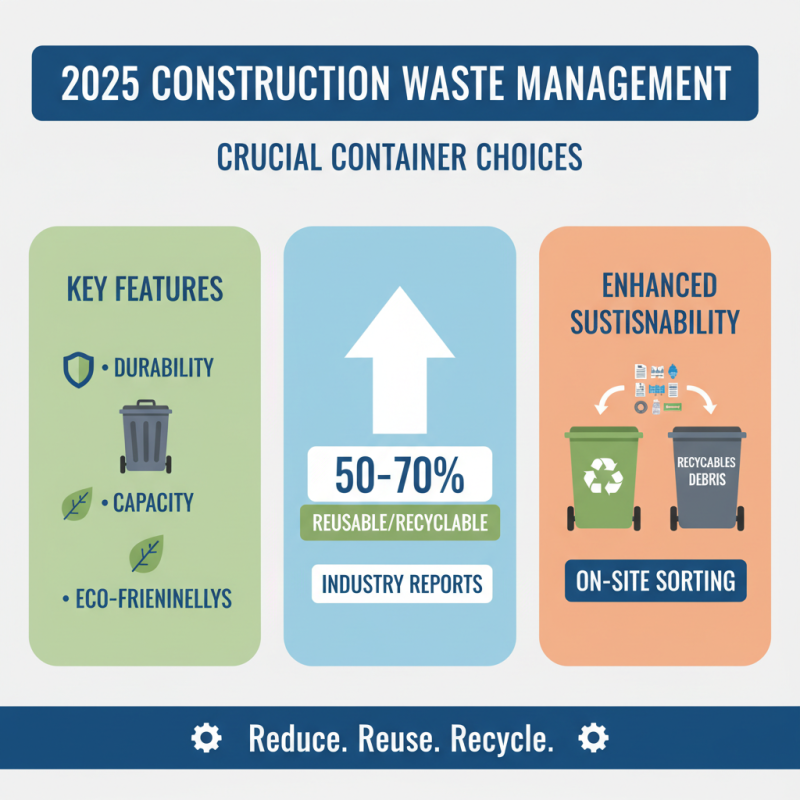
In 2025, the construction industry will face increasing pressure to manage waste efficiently, making the choice of waste containers more crucial than ever. Key features to look for in construction waste containers include durability, capacity, and eco-friendliness. According to industry reports, 50-70% of the waste generated on construction sites can be recycled or repurposed. Hence, containers that facilitate sorting and separation of materials on-site can significantly enhance sustainability efforts.
Another important factor is the container's accessibility and usability. Features such as customizable openings and wheels for mobility can improve user interaction and waste management efficiency. Surveys indicate that effective waste management practices can reduce overall disposal costs by up to 20%, highlighting the financial benefit of investing in high-quality waste containers. Furthermore, containers made from recycled materials or designed for easy recycling can align with the growing emphasis on green building practices, as data suggest that environmentally friendly construction methods will account for more than 40% of the industry by 2025.
By focusing on these key features, construction companies can ensure they are equipped for the challenges ahead, promoting both operational efficiency and environmental responsibility.
Environmental Impact and Sustainability in Waste Management
As the construction industry gears up for 2025, the focus on environmental impact and sustainability in waste management continues to intensify. According to the World Economic Forum, the construction sector accounts for nearly 40% of global carbon emissions and 30% of total waste generated. In response, it is crucial for project managers and contractors to integrate sustainable practices into their operations. Selecting the right waste containers not only optimizes project logistics but also enhances waste sorting and recycling efforts, thereby reducing landfill contributions.
One effective strategy for improving sustainability in construction waste management is adopting multi-stream recycling containers. These containers facilitate the separation of materials such as wood, metal, and plastics right at the project site. A report by the Recycling Partnership notes that incorporating these containers can lead to a 30% increase in recycling rates, drastically reducing overall waste. Additionally, offering employees comprehensive training on proper waste disposal can further promote a culture of sustainability on-site.
**Tips:** Consider placing recycling stations near high-traffic areas of your project to encourage proper sorting. Regularly monitor waste diversion rates to assess the effectiveness of your recycling efforts. Moreover, partnering with local recycling centers can provide data and resources to support ongoing improvements in waste management practices.
Cost-Effectiveness and Budgeting for Waste Container Solutions
When planning a construction project, budgeting for waste container solutions is crucial to ensure cost-effectiveness. Selecting the right containers can help manage waste efficiently while minimizing expenditure. In 2025, the options for construction waste containers will continue to evolve, offering improved features that cater to various project needs. By evaluating container sizes, types, and rental versus purchase decisions, project managers can tailor their choices to fit their budgets without compromising on quality.
**Tips:** Consider assessing the volume and type of waste your project will generate. This will help you choose a container that is not too large or too small, ultimately saving you money. Additionally, explore local providers and compare their pricing structures. Sometimes, bundling waste container services with other construction services can lead to discounts, enhancing your overall budget management.
Another key factor in cost-effectiveness is the duration of the rental. Opt for containers that align with your project's timeframe. If your project extends beyond the initial estimate, having the flexibility to extend your rental period at a reasonable rate can prevent unexpected costs. Regularly reviewing your waste output and container usage can also lead to adjustments that optimize both container costs and waste management efficiency.