How to Choose the Best Cat Tree for Your Cat?
Choosing the best Cat Tree begins with observing your cat, not following the newest design trend. A confident climber may prefer tall platforms, while an older cat may need wide steps and gentle access. Watch where your cat sleeps, scratches, hides, and watches the room. These habits provide useful evidence. A sunny window shelf, a quiet cubby, or a thick sisal post can reveal more than a product description.
Safety deserves careful attention. A stable base should resist wobbling when your cat jumps from the top platform. Each level needs enough space for comfortable turning and stretching. Check the materials, stitching, platform edges, and scratching surfaces before assembly. A Cat Tree with soft fabric may look attractive, but loose threads can become a problem. Easy-to-clean covers also matter, especially in homes with long-haired cats. Veterinary and feline welfare guidance commonly supports opportunities for climbing, scratching, resting, and retreating.
Room size matters too. Measure the available floor area, ceiling height, and nearby furniture. A tall structure can enrich a small room, yet it may overwhelm a nervous cat. Sometimes, the bigger option is not better. Consider weight limits and the number of cats using it. Two cats may need separate resting spaces to reduce competition. I may be overly cautious here, but ignoring small signs of stress can make an expensive Cat Tree unused. The ideal choice balances stability, comfort, enrichment, cleaning, and your cat’s changing needs. Observe the result after installation, then adjust the location or accessories when necessary.
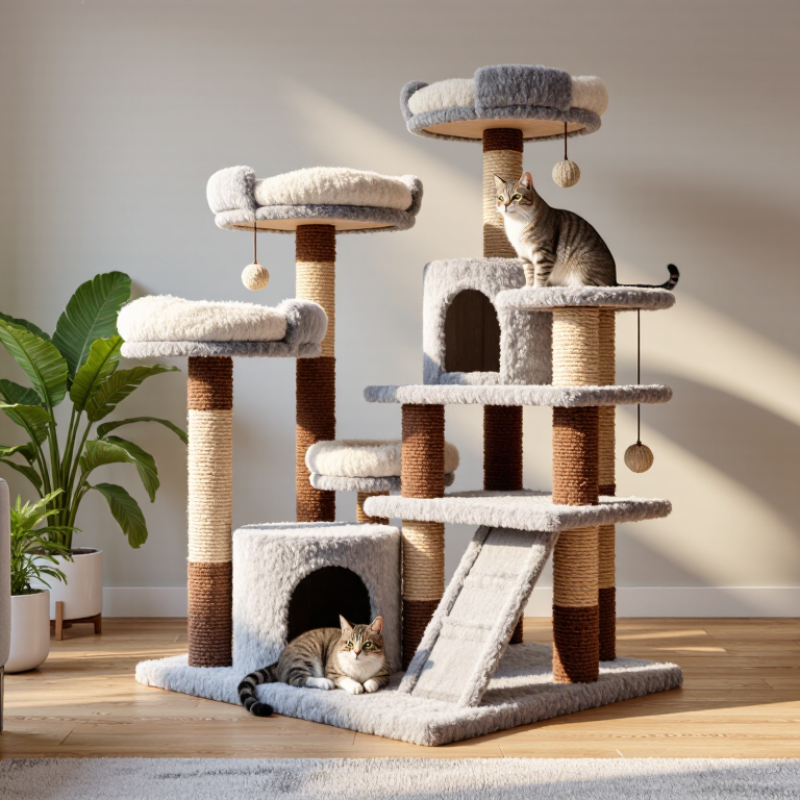
Assess Your Cat’s Size and Activity: Cats Sleep 12–16 Hours Daily (Cornell)
Choosing the best cat tree starts with your cat’s body, habits, and daily rhythm.
The Cornell Feline Health Center notes that cats sleep 12–16 hours each day. That makes comfort essential, not optional. A sleepy cat needs a wide, padded platform with enough room to turn, stretch, and curl up without slipping.
Measure your cat from nose to tail base, then compare that length with each resting surface. The platform should support the whole body.
For larger cats, choose broad shelves and a strong, weighted base. Test the tree gently before use. It should not wobble when your cat jumps onto it. Safety depends on structure, not appearance.
Activity level matters just as much.
A young, energetic cat may need multiple levels, a tall climbing route, and sturdy scratching posts. A senior cat may prefer lower platforms with short, easy steps. Add a quiet hideaway for cats that retreat during noise or household activity.
Observe the details. Does your cat leap, climb, scratch, or simply nap? I would not choose the tallest tree automatically; height can be useless if the route feels unstable.
A beautiful setup can still fail when the sleeping platform is too small. Measure twice. Watch your cat for a week, then adjust the placement if needed.
Prioritize Vertical Space and Perches: Apply AAFP/ISFM Welfare Guidance
Choosing a cat tree starts with vertical space, not decoration. AAFP and ISFM welfare guidance encourages cats to access elevated, secure resting places. Height can help a cat observe the room while avoiding unwanted contact. Look for several levels, wide platforms, and at least one sheltered perch. A nervous cat may prefer a quiet platform above household activity. An outgoing cat may choose the highest lookout.
Stability matters more than impressive height. I have seen cats ignore tall structures that wobble when they jump. Choose a broad base and test every platform with gentle pressure. Surfaces should provide firm grip, especially for older cats or cats with joint discomfort. Place the tree near a window or familiar resting area, but keep escape routes open. Do not position it beside loud appliances or in a cramped corner.
A good design offers choice. Include a low resting level, an easy climbing route, and a perch high enough for observation. Multiple cats may need separate platforms to reduce competition. Keep food, water, litter areas, and resting spaces sensibly separated. Washable covers are useful.
Cats can be surprisingly opinionated. I once assumed a soft hammock would be popular, yet the cat preferred a plain wooden shelf. That mistake changed my approach. Watch how your cat climbs, hides, stretches, and leaves the tree. Reconsider the setup when mobility, confidence, or household routines change.
| Selection Dimension | Why It Matters for Cat Welfare | Practical Target | How to Evaluate the Cat Tree | Priority |
|---|---|---|---|---|
| Vertical Space | Elevated locations can help cats observe their surroundings, rest undisturbed, and choose distance from people or other animals. | Choose a structure with at least one elevated resting area and enough height for the cat to use it comfortably. | Place the tree where the cat can survey the room without being forced into a noisy, high-traffic area. Check that the highest platform is stable and accessible. | Essential |
| Number of Perches | Multiple resting options support choice and reduce competition in multi-cat households. | Provide more than one perch when possible, especially when two or more cats share the home. | Look for platforms at different heights and positions. Avoid a design with only one usable resting surface for several cats. | Essential |
| Perch Size and Comfort | Cats need adequate space to sit, rest, turn around, and adopt their preferred sleeping posture. | Select platforms that fit the cat’s body length and allow comfortable repositioning without hanging over the edge. | Compare each platform with the cat’s body size. Curled sleeping areas may be smaller, while lounging shelves should provide more usable surface area. | High |
| Safe Access and Escape Routes | Predictable movement paths and the ability to move away from another cat can reduce stress and avoid forced interactions. | Prefer staggered levels, wide transitions, and more than one direction of movement where the layout permits. | Check whether a larger or less confident cat could leave a perch without passing directly through another cat’s space. | High |
| Stability and Load Support | A wobbly or tipping structure may cause fear, injury, or avoidance of the entire resource. | Use a broad, weighted base and a rigid frame that remains stable during jumping, climbing, and turning. | Apply firm hand pressure from several directions before use. Recheck bolts, joints, and platforms regularly. | Essential |
| Scratching Opportunities | Scratching is normal feline behavior that supports claw maintenance, stretching, scent communication, and emotional expression. | Include both vertical and horizontal scratching surfaces when possible, with enough height for a full-body stretch. | Choose durable, securely attached material. Position the scratching areas near resting zones or locations where the cat already scratches. | High |
| Material, Grip, and Maintenance | Secure footing encourages use, while cleanable materials support hygiene and help preserve familiar household resources. | Prefer non-slip surfaces, firmly attached coverings, rounded edges, and removable or cleanable components. | Inspect for loose fibers, exposed staples, sharp edges, unstable fabric, and areas that cannot be cleaned after hair, dirt, or accidents. | High |
| Location and Household Placement | A well-designed tree may be ignored if it is placed beside frightening noises, unstable furniture, or an unavoidable conflict zone. | Place it near a socially useful but low-stress area, with a clear view and sufficient distance from food, litter boxes, and loud appliances. | Observe whether the cat can rest without being disturbed and whether the structure is away from hazards such as open windows, heaters, or fragile objects. | Essential |
| Individual Cat Needs | Age, mobility, body size, confidence, and health status affect how a cat climbs, jumps, and uses elevated resources. | Match platform height, spacing, and access difficulty to the individual cat rather than choosing the tallest design automatically. | For older, overweight, injured, or mobility-limited cats, add lower resting levels, ramps, or steps and avoid demanding jumps. | Essential |
| Resource Distribution for Multiple Cats | Separate, visually distributed resources can reduce competition and help each cat control access to resting and escape areas. | Use multiple resting places in different locations instead of relying on one central cat tree. | Observe whether one cat blocks the only route or perch. Add another elevated option in a separate area if access conflicts occur. | Essential |
| Cat Acceptance and Choice | Welfare-focused housing supports choice and control; a resource is useful only if the cat voluntarily uses it. | Allow gradual introduction and keep alternative resting places available. | Place familiar bedding or a toy nearby, avoid forcing the cat onto the tree, and monitor voluntary use over several days. | High |
Choose Scratching Surfaces: Support Cats’ Territorial Marking Behavior (AAFP)
How to Choose the Best Cat Tree for Your Cat?
Scratching is more than claw maintenance. It is a normal territorial marking behavior. The AAFP/ISFM Feline Environmental Needs Guidelines explain that cats leave both visible marks and scent from glands in their paw pads. A suitable cat tree should support this behavior safely, not suppress it.
Choose sturdy scratching surfaces with different textures. Sisal rope offers resistance, while dense cardboard feels softer under the claws. Some cats prefer wood or rough fabric. Watch your cat’s habits before buying; I once assumed every cat wanted a tall post, but one preferred a flat scratcher beside the sofa. Cats can be inconveniently individual.
The post should allow a full stretch, with no wobbling. Place it near sleeping areas, doorways, or furniture your cat already scratches. These locations carry social meaning. In multi-cat homes, provide more than one scratching station to reduce competition. The 2023–2024 APPA National Pet Owners Survey estimated 46.5 million U.S. households owned cats, showing how many homes need practical feline enrichment. However, household ownership data does not reveal each cat’s scratching preference. That limitation matters.
Replace worn surfaces when they become loose or sharp. Keep observing. A cat tree can look ideal to people and still feel useless to a cat.
How to Choose the Best Cat Tree: Scratching Surfaces for Territorial Marking
Evidence-informed suitability scores for common scratching surfaces. Higher scores indicate better support for stability, full-body stretching, claw engagement, and visible or scent-based territorial marking.
Choose a sturdy scratching area that allows the cat to stretch fully. Offering both vertical and horizontal surfaces, with different textures such as sisal, cardboard, or wood, gives the cat more ways to express normal scratching and territorial-marking behavior. Scores are a practical selection aid rather than laboratory measurements.
Check Stability and Accessibility: Match Platforms to Your Cat’s Mobility
How to Choose the Best Cat Tree for Your Cat?
A stable cat tree should stay firm when your cat jumps, turns, or lands unevenly. I test it by pressing each platform from different angles. Push gently. Any rocking deserves attention. A wide base reduces tipping, especially for energetic cats. Heavy, non-slip feet can improve grip on smooth floors. Place the tree against a wall, but never depend on the wall alone. Loose parts, sharp edges, and thin platforms may create avoidable risks. I once assumed height mattered most, but stability proved more important in daily use.
Accessibility should match your cat’s age, body size, and mobility. Young cats may enjoy tall platforms with challenging jumps. Older cats or cats with stiff joints need shorter distances and broader resting areas. Low entrances, ramps, and staggered shelves can make climbing less demanding.
Keep food, water, and litter areas separate from busy landing zones. Watch how your cat moves for several days. Hesitation matters. A cat that pauses before jumping may need an easier route. A small step can help. Platform surfaces should offer traction without catching claws. Soft covering feels comfortable, but it can hide loose stitching. Check it regularly. Some cats still avoid ramps, despite our careful planning, so adjust the layout instead of forcing access.
Compare Materials and Features: Follow AAFP/ISFM Environmental Needs Standards
How to Choose the Best Cat Tree for Your Cat?
The APPA 2023–2024 National Pet Owners Survey reports that 46.5 million U.S. households own cats. That scale makes everyday welfare design important, not decorative. The AAFP/ISFM Environmental Needs Guidelines identify five needs, including safe spaces, separated resources, play, predictable human interaction, and respect for scent. A suitable cat tree should support several of these needs at once.
Material affects comfort and maintenance. Solid wood or thick plywood usually provides stronger support than thin particleboard. Sisal offers a useful scratching surface, especially on vertical posts. Soft fabric feels warm, but it can trap hair and odors. Washable covers help, although “easy to clean” is sometimes overstated. Check the seams. Examine the base. A tree that wobbles when touched may frighten a cautious cat.
Choose platforms with different heights and clear escape routes. A covered box can function as a retreat, while an open shelf supports observation. Avoid forcing a cat to pass another cat in a narrow tunnel. The 2024 AAFP Intercat Tension Guidelines emphasize reducing competition and providing separated resources. Even in one-cat homes, this principle remains practical. Place the tree near a quiet window, but away from noisy appliances. My imperfect rule is simple: test stability, smell, texture, and cleaning effort before judging appearance. A beautiful tower can still be a poor environmental choice.
