How to Build a Shipping Container Home: A Step-by-Step Guide
Building a shipping container home has become an increasingly popular choice for those seeking sustainable and cost-effective living solutions. According to renowned shipping container construction expert Mark J. Linton, "Using repurposed shipping containers not only minimizes waste but also offers a unique aesthetic that traditional structures simply cannot match." This innovative approach to home building is rooted in both modern environmental awareness and the desire for customizable designs that reflect personal style and practicality.
As more individuals explore the possibilities of shipping container construction, the process of transforming these robust steel boxes into comfortable living spaces has become more accessible. This step-by-step guide will walk you through the essentials of building a shipping container home, providing insights into design choices, site selection, and construction techniques. Whether you're looking to create a cozy retreat or a full-fledged residence, understanding the nuances of shipping container construction will empower you to make informed decisions that align with your vision.

Choosing the Right Shipping Container for Your Home Project
When embarking on the journey of building a shipping container home, selecting the right container is a fundamental first step. Shipping containers come in various sizes, typically 20 or 40 feet, and choosing the appropriate size hinges on your space requirements and intended design. For smaller homes or guest houses, a single 20-foot container may suffice, while larger families or those seeking more spacious living areas might consider combining multiple 40-foot containers. Think about your layout and how much room you need for essential areas such as the kitchen, bathroom, and living space.
Moreover, it’s crucial to assess the condition of the shipping containers at your disposal. While many containers come in a standard gray, they can also showcase various colors and styles, allowing for some aesthetic flexibility. Check for structural integrity, paying close attention to any signs of rust, dents, or leaks. It’s advisable to opt for "one-trip" containers, which are relatively new and have seen minimal use, ensuring better durability and fewer repairs. Ultimately, the right container sets the stage for your vision, laying the groundwork for a comfortable and innovative living space.
Designing Your Container Home: Layout and Space Planning
When designing a shipping container home, effective layout and space planning are crucial for maximizing functionality and comfort. According to a report by the Container Housing Institute, the average shipping container provides approximately 320 square feet of living space, creating unique challenges for interior design. To best utilize this space, it's essential to adopt an open floor plan, which can enhance the feeling of spaciousness, important in smaller homes. Incorporating multifunctional furniture, such as a sofa bed or foldable dining table, can also help in making the most of a compact footprint.
Additionally, vertical space should not be overlooked. Creating lofted areas or using wall-mounted storage can keep living areas organized while allowing for maximum floor space. Survey data from the Green Building Council indicates that 65% of eco-conscious homeowners prefer designs that include natural light and efficient airflow, both of which are critical considerations in a container home. Strategically placing windows and installing skylights can improve both aesthetics and energy efficiency, fulfilling the dual role of enhancing the living environment while reducing reliance on artificial lighting.
Preparing the Site: Foundations and Groundwork for Containers
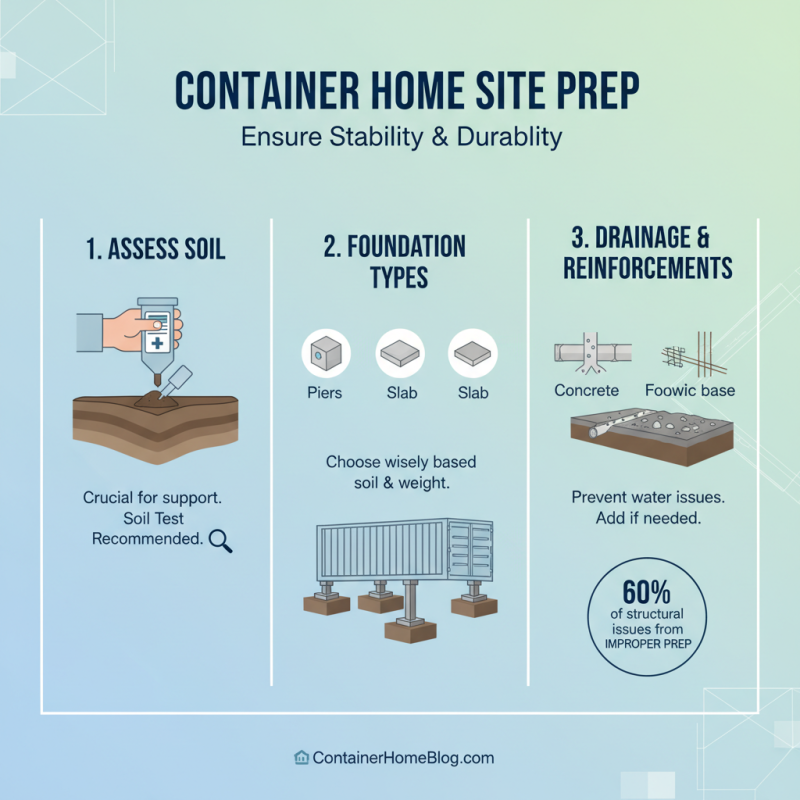
Preparing the site for a shipping container home is a crucial step that involves careful consideration of the foundations and groundwork necessary to ensure stability and durability. According to a report by the Container Housing Association, nearly 60% of structural issues in container homes can be traced back to improper site preparation. To mitigate these risks, it is essential to assess the soil conditions, ensuring it can support the weight of the containers, which can average between 4,000 to 8,000 pounds fully loaded. A soil test can provide valuable insights, allowing homeowners to identify if additional reinforcements or drainage solutions are needed.
Once the soil conditions are understood, the next step is selecting the appropriate foundation type. The most common foundation options for shipping container homes include concrete slabs, pier foundations, and concrete footings. A study published in the Journal of Green Building highlights that using a pier foundation can be particularly advantageous, as it elevates the container, reducing risks associated with flooding and promoting better air circulation. The foundation should also allow for proper drainage, as stagnant water can lead to rust and degradation of the containers over time. By investing time and resources into proper site preparation, homeowners can enhance the longevity and stability of their shipping container homes, making it a worthwhile endeavor.
Insulating and Waterproofing Your Shipping Container Home
When constructing a shipping container home, insulation and waterproofing are crucial steps
to ensure comfort and longevity. The first step in insulating your container is to choose the right materials. Common options include
spray foam, rigid foam boards, and fiberglass batts.
Spray foam is particularly effective as it expands to fill gaps, providing an airtight seal. It's essential to insulate both the
walls and the roof, as containers can experience significant
temperature fluctuations. A layered approach, using a combination of insulation types, can maximize thermal performance and minimize energy costs.
Waterproofing is equally vital to protect your home from moisture intrusion.
Start by inspecting the shipping container for any rust or damages that could lead to leaks. Applying a high-quality sealant
to the seams and welds will create a barrier against water. Additionally, consider installing a vapor barrier on the interior side of the insulation
to prevent moisture buildup. To further enhance waterproofing, use exterior coatings specifically designed for metal surfaces,
which can provide an extra layer of protection from the elements. Properly executed insulation and waterproofing will not only enhance the comfort of your shipping container
home but also prolong its lifespan.
Finishing Touches: Interior Design and Utility Connections
When it comes to designing the interior of a shipping container home, understanding space optimization and aesthetic appeal is crucial. According to the International Journal of Architecture and Urban Development, effective interior design can significantly enhance the livability of smaller spaces, which is particularly relevant for homes constructed from shipping containers. The average container measures 8 feet wide and 40 feet long, presenting unique challenges and opportunities for creative design. Utilizing multifunctional furniture can maximize space while allowing residents to maintain comfort and style. For instance, built-in storage solutions and convertible furniture like sofa beds can transform a compact area into a functional living space.
Utility connections are another essential consideration in the successful completion of a shipping container home. The National Association of Home Builders reports that proper electrical, plumbing, and HVAC systems are vital for ensuring a safe and comfortable environment. Shipping containers, often used in various climates, require insulation tailored to local weather conditions to improve energy efficiency. This ensures that homes not only provide shelter but also support sustainable living practices. Moreover, integrating renewable energy sources, such as solar panels, can reduce overall utility costs and minimize the environmental impact of container homes, making them an increasingly popular choice among environmentally conscious homeowners.
Shipping Container Home Features and Costs
This bar chart illustrates the average costs associated with various features when building a shipping container home. The values represent estimated costs in USD based on common choices and design preferences.