The Best 5 Dumpsters for Construction Projects You Need to Know?
In the construction industry, managing waste effectively is a critical challenge. A report from the Environmental Protection Agency (EPA) indicates that construction and demolition activities generated about 600 million tons of waste in 2018. A reliable dumpster for construction is essential to minimize this waste. Selecting the right dumpster can drastically impact project efficiency.
Many may overlook the importance of choosing an appropriate dumpster size. A dumpster that is too small can lead to overages, while an excessive size wastes resources. Contractors often face delays due to inadequate waste management. The average construction site may require multiple dumpsters, increasing costs and logistical concerns. It's crucial to evaluate your project's specific waste needs.
Finding the best dumpster for construction projects is not just about price. Considerations include weight limits, rental terms, and accessibility. Reflecting on past experiences, many construction managers realize they underestimated their waste requirements. This oversight can lead to unexpected challenges. In this article, we will explore the top five dumpsters that can streamline your construction projects effectively.
The Importance of Choosing the Right Dumpster for Construction Projects
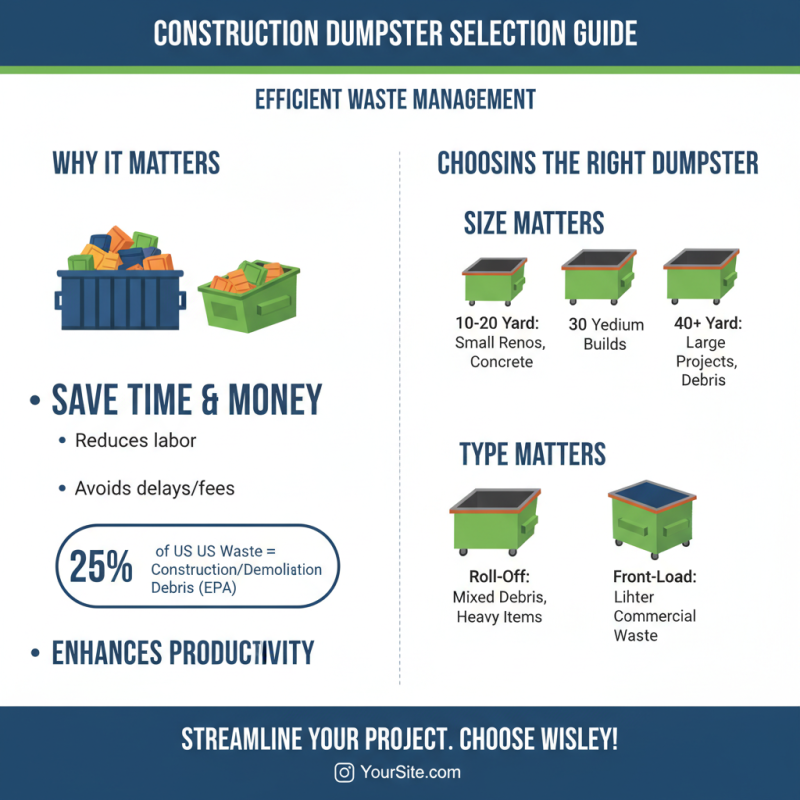
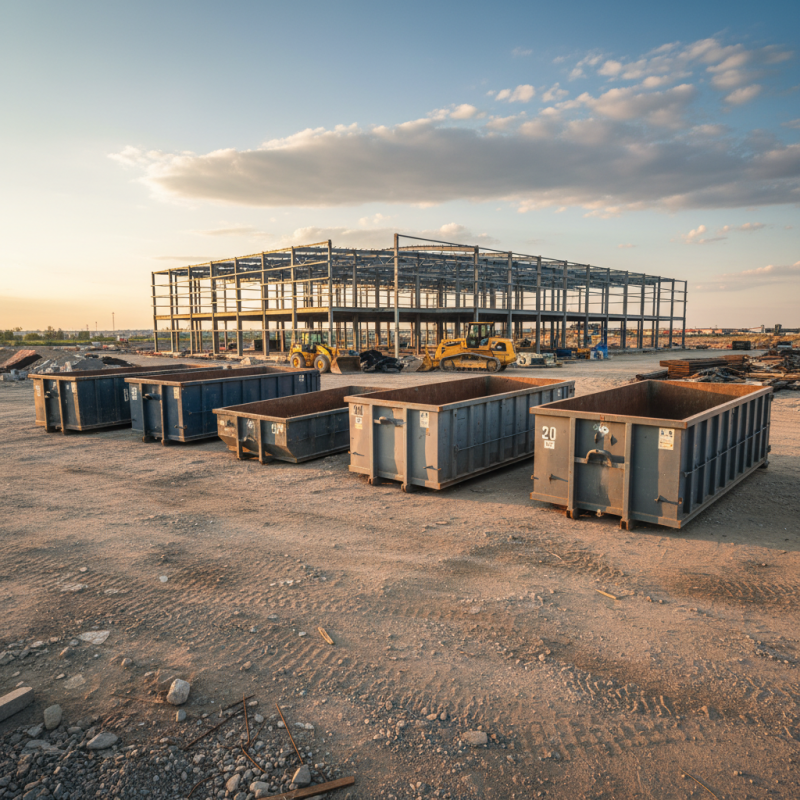
Choosing the right dumpster for construction projects is essential for efficient waste management. According to a report by the Environmental Protection Agency (EPA), construction and demolition debris accounts for nearly 25% of the total U.S. waste stream. Picking the right size and type of dumpster can significantly impact productivity and costs.
Inadequate dumpster sizes lead to overflow, creating delays and safety hazards. A study showed that construction sites using correctly sized dumpsters increased their efficiency by 30%. It’s crucial to assess the volume and type of materials generated by the project. Heavy debris requires robust dumpsters that can handle extra weight. For lighter, bulk materials, like wood and drywall, smaller containers might suffice, helping to save on disposal costs.
Beyond size, understanding local regulations on waste disposal is vital. Many areas have specific guidelines on what can be disposed of in construction dumpsters. Violating these can result in fines and project delays. Some contractors often overlook these rules, leading to errors that could have been avoided with proper planning. Effective waste management is not just about disposal; it reflects your commitment to sustainability and project success.
Key Features to Look for in Construction Dumpsters
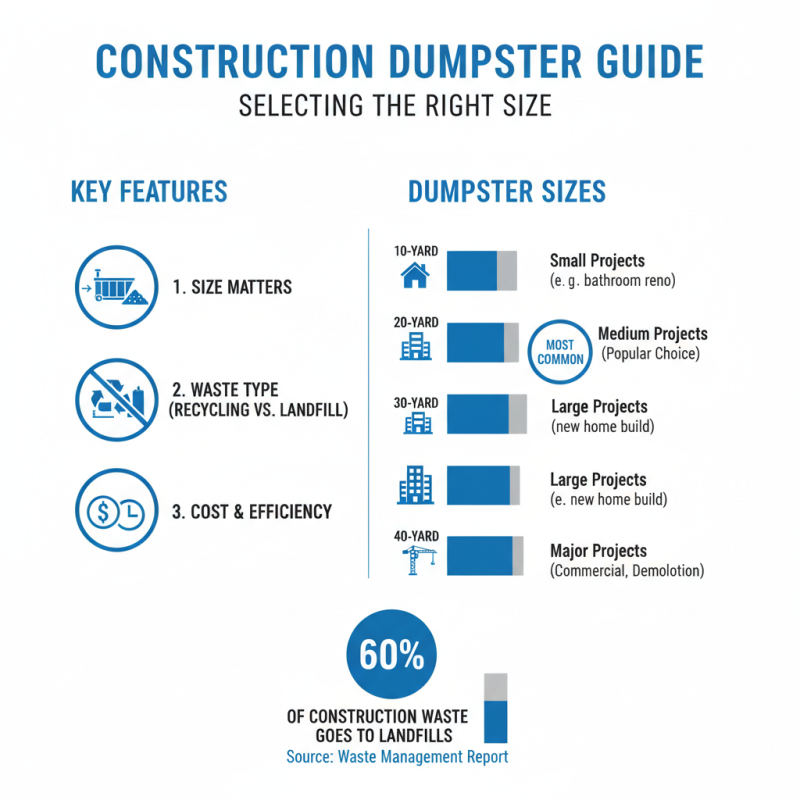
When selecting a dumpster for construction projects, understanding key features is essential. One crucial aspect is size. Construction sites produce varying amounts of waste. A report from Waste Management showed that around 60% of construction waste goes to landfills. Choosing the right dumpster size ensures waste disposal efficiency. Typically, dumpsters range from 10 to 40 yards. A 20-yard dumpster is often a popular choice for medium-sized projects.
Weight capacity is another vital feature. Most dumpsters have a weight limit ranging from 3,000 to 10,000 pounds. Exceeding this limit can lead to additional fees and complications. Studies reveal that approximately 30% of construction firms face fines due to overweight loads. It's important to gauge the type of materials that will go into the dumpster. Heavy materials, such as concrete and bricks, can significantly impact weight.
Accessibility is also a noteworthy factor. Construction sites often have limited space. A dumpster should be easy to reach for both delivery and pick-up. Proper placement prevents workflow disruptions. An ideal location should enable safe loading without obstructing equipment. Ultimately, understanding these features can enhance project efficiency and minimize unforeseen challenges.
Comparative Analysis of the Top 5 Dumpsters for Construction Use
When it comes to construction projects, choosing the right dumpster is crucial. The right size can save time and money. Five types stand out for their efficiency and practicality. A 10-yard dumpster is ideal for smaller renovations. It fits in tight spaces and handles debris well. For medium-sized jobs, a 20-yard option provides more capacity. This size is popular for larger home improvements.
For heavy-duty projects, a 30-yard dumpster is the best choice. It accommodates bulk materials like concrete and metal. However, you need to consider whether you truly need this capacity. Oversizing may lead to unnecessary expenses. Some might think going larger saves time, but that’s not always true. The right size matters more.
Tips: Always measure the space where the dumpster will go. Ensure access for delivery and pickup. Double-check local regulations regarding placement. This can prevent fines or project delays. Clarity in communication with your service provider is essential. Misunderstandings about size or type can lead to frustration. Reflecting on your needs can streamline the process. Careful planning pays off in the end.
The Best 5 Dumpsters for Construction Projects
This bar chart displays the capacity of different dumpster sizes commonly used in construction projects. The sizes range from small 10-yard dumpsters to larger 40-yard options, providing a clear visual representation of their capacities. This information is crucial for project planning and resource management in construction.
Cost Considerations: Budgeting for Your Construction Dumpster Rental
When planning a construction project, understanding dumpster rental costs is crucial. According to a recent industry report, the average cost for renting a construction dumpster ranges from $300 to $600 per week. This variation often depends on the size of the dumpster and the type of waste being disposed of. Many homeowners underestimate these costs, which can lead to budget overruns.
Cost considerations go beyond the initial rental price. Disposal fees can significantly impact your budget. For example, materials like concrete and asphalt can incur higher disposal rates. Additionally, exceeding weight limits set by rental companies can result in hefty overage charges. A report from the National Waste and Recycling Association highlights that 29% of contractors faced unexpected disposal costs on their latest projects. This statistic underscores the need for careful planning and transparent communication with rental providers.
Thinking meticulously about project timelines is also essential. Delays can extend the rental period, increasing overall expenses. Some contractors find themselves paying for extra weeks due to unforeseen circumstances. A proactive approach to estimating waste generation can help mitigate these costs. Ultimately, a well-structured budget that accounts for all possible expenses will lead to a more streamlined construction process.
Best Practices for Loading and Managing Your Construction Dumpster
When managing a construction dumpster, it's vital to follow best practices for loading and disposal. Start by organizing your waste into recyclable and non-recyclable piles. This improves efficiency and keeps the dumpster neat. Don’t overfill the dumpster, as this can lead to fines or extra charges. Ensure that materials are distributed evenly to maintain balance.
Tips for loading your dumpster include breaking down large items to maximize space. Smaller pieces can fit tightly and reduce wasted area. Keep hazardous materials out of the dumpster. Improper disposal can lead to safety hazards and legal issues. Stick to non-hazardous construction debris to stay compliant.
Make sure to check the rental agreement for weight limits. Exceeding these limits can be costly. Regularly monitor the load to prevent reaching capacity too quickly. Plan regular disposal trips if the project generates substantial waste. This keeps your site safe and efficient, allowing work to progress without delays.